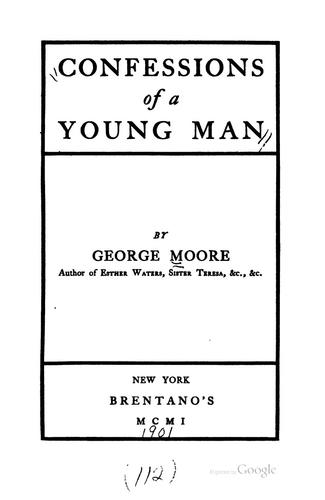
Moore, George, 1852-1933; Paris (France) -- Intellectual life
There is one thing in England that is free, that is spontaneous, that
reminds me of the blitheness and nationalness of the Continent;--but
there is nothing French about it, it is wholly and essentially English,
and in its communal enjoyment and its spontaneity it is a survival of
Elizabethan England--I mean the music-hall; the French music-hall seems
to me silly, effete, sophisticated, and lacking, not in the popularity,
but in the vulgarity of an English hall--I will not say the Pavilion,
which is too cosmopolitan, dreary French comics are heard there--for
preference let us say the Royal. I shall not easily forget my first
evening there, when I saw for the time a living house--the dissolute
paragraphists, the elegant mashers (mark the imaginativeness of the
slang), the stolid, good-humoured costers, the cheerful lights o' love,
the extraordinary comics. What delightful unison of enjoyment, what
unanimity of soul, what communality of wit; all knew each other, all
enjoyed each other's presence; in a word, there was life. Then there
were no cascades of real water, nor London docks, nor offensively rich
furniture, with hotel lifts down which some one will certainly be
thrown, but one scene representing a street; a man comes on--not, mind
you, in a real smock-frock, but in something that suggests one--and
sings of how he came up to London, and was "cleaned out" by thieves.
Simple, you will say; yes, but better than a _fricassée_ of _Faust_,
garnished with hags, imps, and blue flame; better, far better than a
drawing-room set at the St James's, with an exhibition of passion by Mrs
and Mr Kendal; better, a million times better than the cheap popularity
of Wilson Barrett--an elderly man posturing in a low-necked dress to
some poor trull in the gallery; nor is there in the hall any affectation
of language, nor that worn-out rhetoric which reminds you of a
broken-winded barrel-organ playing _a che la morte_, bad enough in
prose, but when set up in blank verse awful and shocking in its more
than natural deformity--but bright quips and cranks fresh from the
back-yard of the slum where the linen is drying, or the "pub" where the
unfortunate wife has just received a black eye that will last her a
week. That inimitable artist, Bessie Bellwood, whose native wit is so
curiously accentuated that it is sublimated, that it is no longer
repellent vulgarity but art, choice and rare--see, here she comes with
"What cheer, Rea! Rea's on the job." The sketch is slight, but is
welcome and refreshing after the eternal drawing-room and Mrs Kendal's
cumbrous domesticity; it is curious, quaint, perverted, and are not
these the _aions_ and the attributes of art? Now see that perfect
comedian, Arthur Roberts, superior to Irving because he is working with
living material; how trim and saucy he is! and how he evokes the soul,
the brandy-and-soda soul, of the young men, delightful and elegant in
black and white, who are so vociferously cheering him, "Will you stand
Public-domain text, read in full here on John Shaqi.
Reviews
Reviews
No reviews yet
Be the first to share your thoughts on this work.
Elsewhere in the archive
Join the Discussion
Join the discussion
Sign in to leave a comment or review.
Sign InorCreate an account