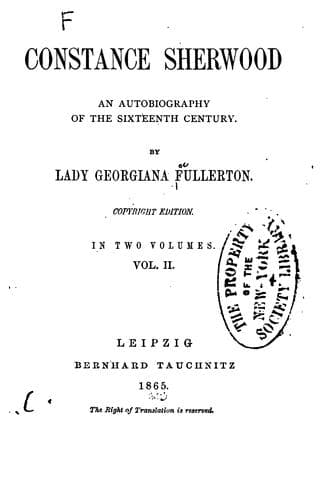
Constance Sherwood: An Autobiography of the Sixteenth CenturyFullerton, Georgiana
History
Constance Sherwood: An Autobiography of the Sixteenth Century
Fullerton, Georgiana
Great Britain -- History -- Elizabeth, 1558-1603 -- Fiction
"Thus I have advised you as my troubled memory can at present suffer
me. Beware of pride, stubbornness, taunting, and sullenness, which
vices nature doth somewhat kindle in you; and therefore you must
with reason and discretion make a new nature in yourself. Give not
your mind too much and too greedily to gaming; make a pastime of it,
and no toil. And lastly, delight to spend some time in reading of
the Scriptures; for therein is the whole comfort of man's life; all
other things are vain and transitory; and if you be diligent in
reading of them, they will remain with you continually, to your
profit and commodity in this world, and to your comfort and
salvation in the world to come, whither, in grace of God, I am now
with joy and consolation preparing myself. And, upon my blessing,
beware of blind papistry, which brings nothing but bondage to men's
consciences. Mix your prayers with fasting, not thinking
thereby to merit; for there is nothing that we ourselves can do that
is good,--we are but unprofitable servants; but fast, I say, thereby
to tame the wicked affection of the mind, and trust only to be saved
by Christ's precious blood; for without a perfect faith therein,
there is no salvation. Let works follow your faith; thereby to show
to the world that you do not only say you have faith, but that you
give testimony thereof to the full satisfaction of the godly. I
write somewhat the more herein, because perchance you have
heretofore heard, or perchance may hereafter hear, false bruits that
I was a papist; [Footnote 3] but trust unto it, I never, since I
knew what religion meant (I thank God) was of other mind than now
you shall hear that I die in; although (I cry God mercy) I have not
given fruits and testimony of my faith as I ought to have done; the
which is the thing that I do now chiefliest repent.
[Footnote 3: There would seem to be no doubt that the Duke of
Norfolk was a sincere Protestant. The strenuous advice to his
children to beware of Popery affords evidence of it. Greatly,
however, as it would have tended to their worldly prosperity to
have followed their father's last injunctions in this respect, all
but one of those he thus counselled were subsequently reconciled
to the Catholic Church.
The Duke's letters in this chapter are all authentic. See the Rev.
M. Tierney's History of Arundel, and the Appendix to Nott's
edition of Lord Surrey's poems.]
Public-domain text, read in full here on John Shaqi.
Reviews
Reviews
No reviews yet
Be the first to share your thoughts on this work.
Elsewhere in the archive
Join the Discussion
Join the discussion
Sign in to leave a comment or review.
Sign InorCreate an account