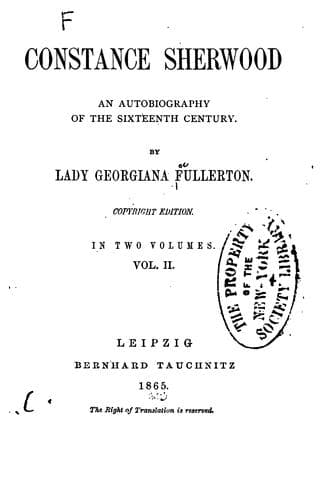
Constance Sherwood: An Autobiography of the Sixteenth CenturyFullerton, Georgiana
History
Constance Sherwood: An Autobiography of the Sixteenth Century
Fullerton, Georgiana
Great Britain -- History -- Elizabeth, 1558-1603 -- Fiction
"Ah, Nan," she cried, as we entered, "I'll help thee to a taste of
this rare medicine, for methinks thou art somewhat shrewish also and
not so conformable to thy husband's will, my lady, as a good wife
should be. By that same token that my lord willed to take me behind
him on his horse a gay ride round the square, and, forsooth, because I
had not learnt my lesson, thou didst shut me up to die of melancholy.
Ah, me! My mother had a maid called Barbara--
'Sing willow, willow, willow.'
That is one of Phil's favorite songs. Milicent, methinks I will call
thee Barbara, and thou shalt sing with me--
'The poor soul sat sighing by a sycamore tree,--
Sing all a green willow;
Her hand on her bosom,'--
There, put thy hand in that fashion--
'her head on her knee,'--
Nay, prithee, thou must bend thy head lower--
'Sing willow, willow, willow.'"
"My lady," said the gentlewoman, smiling, "I promise you I dare not
take upon me to fulfil my tasks with credit to myself or your
ladyship, if Mistress Bess hath the run of this room, and doth prepare
cordials after her fashion from your ladyship's stores."
"Ah, Bess!" quoth my lady, shaking her finger at the saucy one; "I'll
deliver thee up to Mrs. Fawcett, who will give thee a taste of the
place of correction; and Phil is not here to-day to beg thee off. And
now, good Milicent, prithee make a bundle of such clothes as we have
in hand, and such comforts as be suitable to such as are sick and in
prison, for this sweet young lady hath need of them for some who be in
that sad plight."
"And, my lady," quoth the gentlewoman, "I would fain learn how to
dress wounds when the flesh is galled; for I do sometimes meet with
poor men who do suffer in that way, and would relieve them if I
could."
"I know," I cried, "of a rare ointment my mother used to make for that
sort of hurt; and if my Lady Surrey gives me license, I will remember
you, mistress, with the receipt of it."
My lady, with a kindly smile and expressed thanks, assented; and when
we left the closet, I greatly commending the young gentlewoman's
beauty, she said that beauty in her was the worst half of her merit.
"But, Mistress Constance," she said, when we had returned to the
saloon, "I may not send her to such poor men, and above all, priests,
who be in prison for their faith, as I hear, to my great sorrow, there
be so many at this time, and who suffer great hardships, more than can
be easily believed, for she is Protestant, and not through conforming
to the times, but so settled in her way of thinking, and earnest
therein, having been brought up to it, that she would not so much as
open a Catholic book or listen to a word in defence of papists."
"But how, then, doth she serve a Catholic lady?" I asked, with a
beating heart; and oh, with what a sad one did hear her answer, for it
was as follows:
Public-domain text, read in full here on John Shaqi.
Reviews
Reviews
No reviews yet
Be the first to share your thoughts on this work.
Elsewhere in the archive
Join the Discussion
Join the discussion
Sign in to leave a comment or review.
Sign InorCreate an account