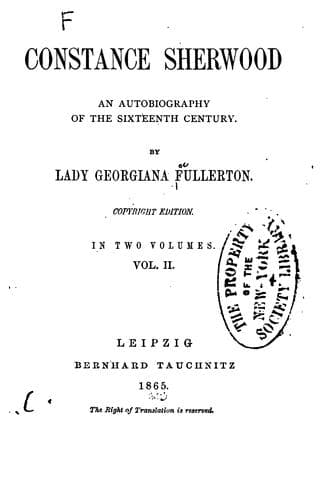
Constance Sherwood: An Autobiography of the Sixteenth CenturyFullerton, Georgiana
History
Constance Sherwood: An Autobiography of the Sixteenth Century
Fullerton, Georgiana
Great Britain -- History -- Elizabeth, 1558-1603 -- Fiction
"The world, my dear daughter, soon begins to seem insipid, and all its
pleasures grow bitter as gall; all the fine shows and delights it
affords appear empty and good for nothing to such as have tasted the
happiness of conversing with Christ, though it be amidst torments and
tribulations, yea and in the near approach of death itself. This joy
so penetrates the soul, so elevates the spirit, so changes the
affections, that a prison seems not a prison but a paradise, death a
goal long time desired, and the torments which do accompany it jewels
of great price. Take with thee these words, which be the greatest
treasure and the rarest lesson for these times: 'He that loveth his
life in this world shall lose it, and he that hateth it shall find
it;' and remember the devil is always upon the watch. Be you also
watchful. Pray you for me. I have a great confidence that we shall see
one another in heaven, if you keep inviolable the word you have given
to God to be true to his Catholic Church and obedient to its precepts,
and he gives me the grace to attain unto that same blessed end."
These words, like the sower's seed, fell into a field where thorns
oftentimes threatened to choke their effect; but persecution, when it
arose, consumed the thorns as with fire, and the plant, which would
have withered in stony ground, bore fruit in a prepared soil.
As we left the prison, it did happen that, passing by the gaoler's
lodge, I saw him sitting at a table drinking ale with one whose back
was to the door. A suspicion came over me, the most unlikely in the
world, for it was against all credibility, and I had not seen so much
as that person's face; but in the shape of his head and the manner of
his sitting, but for a moment observed, there was a resemblance
to Edmund Genings, the thought of which I could not shake off. When we
were walking home, Mr. Congleton said Mr. Hart had told him that a
short time back a gentleman had been seized, and committed to close
confinement, whom he believed, though he had not attained to the
certainty thereof, to be Mr. Willisden; and if it were so, that much
trouble might ensue to many recusants, by reason of that gentleman
having dealt in matters of great importance to such persons touching
lands and other affairs whereby their fortunes and maybe their lives
might be compromised. On hearing of this, I straightway conceived a
sudden fear lest it should be my father and not Mr. Willisden was
confined in that prison; and the impression I had received touching
the youth who was at table with the gaoler grew so strong in
consequence, that all sorts of fears founded thereon ran through my
mind, for I had often heard how persons did deceive recusants by
feigning themselves to be their friends, and then did denounce them to
the council, and procured their arrest and oftentimes their
condemnation by distorting and false swearing touching the speech they
held with them. One Eliot in particular, who was a man of great
Public-domain text, read in full here on John Shaqi.
Reviews
Reviews
No reviews yet
Be the first to share your thoughts on this work.
Elsewhere in the archive
Join the Discussion
Join the discussion
Sign in to leave a comment or review.
Sign InorCreate an account