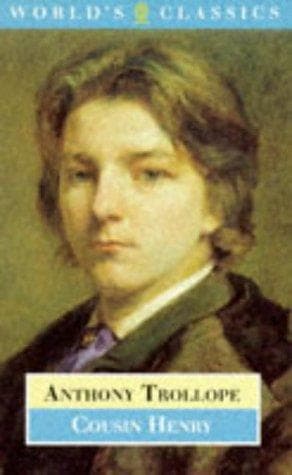
Domestic fiction; Inheritance and succession -- Fiction; Wales -- Fiction
He read it all through yet again;--why he knew not, but in truth
craving some excuse for further delay. With what care the dying old
man had written every word and completed every letter! He sat there
contemplating the old man's work, telling himself that it was for him
to destroy it utterly by just a motion of his wrist. He turned round
and trimmed the candle again, and still sat there with the paper in
his hand. Could it be that so great a result could come from so short
an act? The damning of his own soul! Would it in truth be the giving
up of his own soul to eternal punishment? God would know that he had
not meant to steal the property! God would know that he did not wish
to steal it now! God would know that he was doing this as the only
means of escape from misery which others were plotting for him! God
would know how cruelly he had been used! God would know the injustice
with which the old man had treated him! Then came moments in which he
almost taught himself to believe that in destroying the will he would
be doing no more than an act of rough justice, and that God would
certainly condemn no one to eternal punishment for a just act. But
still, whenever he would turn round to the candle, his hand would
refuse to raise the paper to the flame. When done, it could not be
undone! And whether those eternal flames should or should not get
possession of him, there would be before him a life agonised by the
dread of them. What could Mr Cheekey do worse for him than that?
The Wednesday would at any rate do as well. Why rob himself of the
comfort of one day during which his soul would not be irretrievably
condemned? Now he might sleep. For this night, at any rate, he might
sleep. He doubted whether he would ever sleep again after the doing
of the deed. To be commonly wicked was nothing to him,--nothing to
break through all those ordinary rules of life which parents teach
their children and pastors their flocks, but as to which the world
is so careless. To covet other men's goods, to speak evil of his
neighbours, to run after his neighbour's wife if she came in his
path, to steal a little in the ordinary way,--such as selling a lame
horse or looking over an adversary's hand at whist, to swear to a
lie, or to ridicule the memory of his parents,--these peccadillos
had never oppressed his soul. That not telling of the will had been
burdensome to him only because of the danger of discovery. But to
burn a will, and thereby clearly to steal L1500 a year from his
cousin! To commit felony! To do that for which he might be confined
at Dartmoor all his life, with his hair cut, and dirty prison
clothes, and hard food, and work to do! He thought it would be well
to have another day of life in which he had not done the deed. He
therefore put the will back into the book and went to his bed.
CHAPTER XXI
Mr Apjohn's Success
Public-domain text, read in full here on John Shaqi.
Reviews
Reviews
No reviews yet
Be the first to share your thoughts on this work.
Elsewhere in the archive
Join the Discussion
Join the discussion
Sign in to leave a comment or review.
Sign InorCreate an account