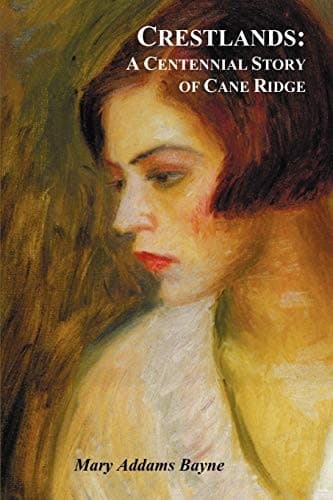
Crestlands: A Centennial Story of Cane RidgeBayne, Mary Addams
History
Crestlands: A Centennial Story of Cane Ridge
Bayne, Mary Addams
Kentucky -- History -- 19th century -- Fiction
Against the jealousy and strife which arose after the religious
excitement induced by the revival meetings of the previous year, Barton
Stone and other ministers lifted up their voices in protest, urging
that the bitter discussion of doctrinal points should cease. This only
turned the tide of warfare against themselves, and they soon became the
objects of bitter invective, because they had ceased to teach
speculative theology, and labored instead to show the people a more
liberal view of the redemptive plan.
Among the ministers who at this time taught a free salvation offered to
all men on the same conditions, was Richard McNemar, a member of the
Presbytery of Ohio, which had carried him through a trial for preaching
what was deemed to be anti-Calvinistic doctrine. By this presbytery his
case was referred to the Synod of Lexington. Stone and three other
ministers of the same views, perceiving in this trial of McNemar a blow
aimed against themselves, drew up a protest against such proceedings.
Then, declaring their freedom from synodical authority, they withdrew
from the jurisdiction, but not from the communion, of the organization;
although several unsuccessful attempts were made, before the synod
convened, to reclaim them in view of their record as able and
influential ministers.
In due time the synod met in Lexington, and took up McNemar's case.
Stone and the other three ministers presented the protest to the synod
through its moderator. A committee was sent to confer and to reason
with the protesting ministers. One immediate result of the conference
was that Matthew Houston, a member of the committee, became convinced
of the justice of the views of Barton Stone and his associates, and
became an advocate of their cause.
After prolonged discussion, the synod suspended the five ministers,
upon the ground that they had departed from the established creed of
their church. The ministers insisted, however, that as they had already
protested and withdrawn from the jurisdiction of the synod, that body
had no power to suspend them--"no more," to quote Stone's words, "than
had the Pope of Rome to suspend Luther after he had done the same
thing; for if Luther's suspension was valid, then the entire Protestant
succession was out of order, and in that case the synod had no power;
so that the act of suspension in this case was utterly void."
The action of the synod created great excitement and much dissension
throughout the country, and not only churches, but families, were
divided. Many persons, convinced that the turmoil was produced, not by
the Bible, but by human, authoritative creeds, were henceforth set
against such creeds, as being disturbers of religious liberty and
detrimental to Christian unity.
Public-domain text, read in full here on John Shaqi.
Reviews
Reviews
No reviews yet
Be the first to share your thoughts on this work.
Elsewhere in the archive
Join the Discussion
Join the discussion
Sign in to leave a comment or review.
Sign InorCreate an account