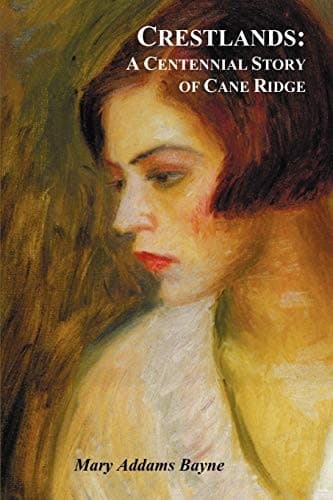
Crestlands: A Centennial Story of Cane RidgeBayne, Mary Addams
History
Crestlands: A Centennial Story of Cane Ridge
Bayne, Mary Addams
Kentucky -- History -- 19th century -- Fiction
The trial at Frankfort did not come off, because of Daviess' failure to
secure the attendance of some important witnesses; but those people who
were gathered at the court-house were by no means defrauded of
entertainment; for they heard a brilliant debate between Henry Clay and
Joseph Hamilton Daviess. The crowds that filled the floor, windows,
galleries and platform of the big court-room remained for hours
spellbound while these two renowned men, each stimulated by the other's
thrilling oratory, and glowing with the ardent conviction of the
justice of his cause, met in intellectual combat. Henry Clay was the
leader of the popular political party in the State, and had the
sympathy of the audience on his side. Daviess was a Federalist, and his
prosecution was regarded by many of his hearers as simply a persecution
of an unfortunate and innocent man who, from motives of political
hatred only, was here arraigned as a traitor. Daviess, however, was
made strong by his full conviction of Burr's guilt; moreover, this very
infatuation of the audience, and the smiling security and
self-assurance of the suspected traitor who sat before him, spurred
Daviess to brilliant effort. But all was in vain, for the present at
least; for, on account of the non-appearance of proper witnesses, the
prosecution was dismissed--to the great rejoicing of the friends of
Burr, who were at that time so under the spell of his fascinating
personality that even had the court found a true bill against him, they
would still have believed him innocent. To show their admiration and
sympathy, these friends and admirers gave a grand public ball at
Frankfort the next evening to celebrate "Aaron Burr's triumph over his
enemies." This ball was followed by another equally brilliant given by
the friends of Daviess, to show their admiration of him and their
belief in the justice of his suit against Burr.
Logan and his three companions returned from Frankfort late Thursday
afternoon. On Saturday, as Logan was leaving the house after an early
breakfast, he was astonished to see Hiram Gilcrest on horseback at the
front gate. Abner hastened down the walk to meet him; but, instead of
accepting the invitation to alight and enter the house, Major Gilcrest
with stern dignity replied that he preferred to remain where he was,
having called that morning, not to pay a visit, but to atone for an
injustice of which he had for a number of years been guilty.
Logan, thinking that the "injustice" had reference to Gilcrest's
opposition to his daughter's marriage, replied that no explanation or
apology was necessary, as the very fact that Major Gilcrest was there
at Crestlands was apology enough. He again invited the Major to come
in, urging the pleasure it would be to Betsy to welcome her father in
her own house, and to have him see her little son William, now a fine
little fellow two years old, and the tiny baby daughter. Hiram,
however, again refused the invitation.
Public-domain text, read in full here on John Shaqi.
Reviews
Reviews
No reviews yet
Be the first to share your thoughts on this work.
Elsewhere in the archive
Join the Discussion
Join the discussion
Sign in to leave a comment or review.
Sign InorCreate an account