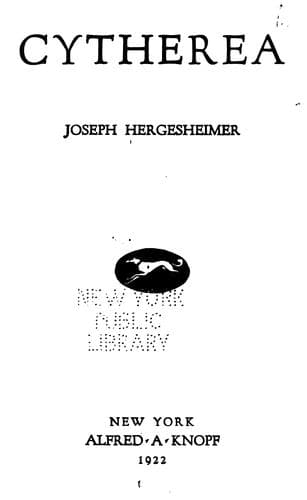
Adultery -- Fiction; Cuba -- Fiction; Runaway husbands -- Fiction
He would see more of them--four days a week were now plenty for the
conducting of his successful enterprises in the city--and give them
what benefits his affection and experience held. In this he mustn't
contradict the influence of their mother; that, so late, would only be
followed by chaos; he'd merely be more with them. Helena was old enough
for a small tractable horse and Gregory must have a pony. All four,
Fanny and he and the children, would jog out in the spring together.
From that mental picture he got a measure of reassurance; a condition
resembling peace of mind again returned. As much as possible, against
the elements of danger, was in his favor. He might have had a wife
who, on the prevalent tide of gin and orange juice, of inordinate
luxuriousness, degraded him with small betrayals. Or he might have been
any one of a hundred unfortunate things. He took life too seriously,
that was evident; a larger degree of mental irresponsibility would be
followed by a more responsible accomplishment of the realities which
bore no more heavily on him than on other men; and in this the cocktails
had their office.
* * * * *
Lee agreed readily, therefore, when, on Friday afternoon, Fanny asked
him to bring Helena and Gregory from dancing-school. This was held in
the Armory; and, past five o'clock, mounting the wide stone steps in
the early gloom and going through the bare echoing hall, he joined the
complacent mothers ranged in chairs pushed against the wall in a spirit
of interested attention. The Armory, following the general literal
interpretation of the sternness of military usage, was gaunt, with a
wide yellow floor and walls of unconcealed brick. In a far corner, on a
temporary and unpainted platform, the pianist sat with her hands raised,
her wrists rigid, preparatory to the next demand upon her strongly
accentuated playing. Lee was surprised at the large number of children
ranged in an irregular ring about the erect brittle presence and
insistent voice of the instructor.
What scant hair he possessed, carefully disposed to cover its
meagreness, was grey, and its color permeated, suggested, the tone of
his thin face. Surrounded by the cruel exuberance of the children,
he seemed incalculably worn, permanently weary, although he
was surprisingly sharp-eyed and adequate. It was, Lee thought
unsympathetically, a curiously negative occupation for a man; the small
graces of the dancing teacher, the bows gravely exchanged with childish
bows, the bent dancing with diminutive slips, the occasional fretful
tone of his voice, further alienated Lee Randon. But the children were a
source of entertainment and speculation.
Public-domain text, read in full here on John Shaqi.
Reviews
Reviews
No reviews yet
Be the first to share your thoughts on this work.
Elsewhere in the archive
Join the Discussion
Join the discussion
Sign in to leave a comment or review.
Sign InorCreate an account