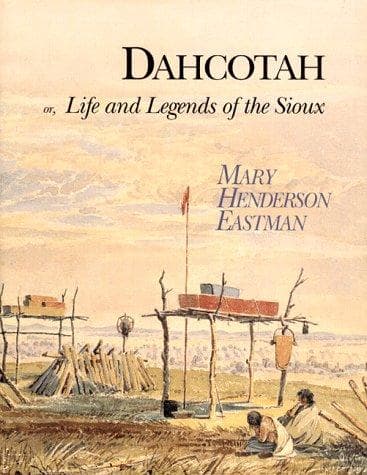
Dahcotah: Life and Legends of the Sioux Around Fort SnellingEastman, Mary H. (Mary Henderson)
History
Dahcotah: Life and Legends of the Sioux Around Fort Snelling
Eastman, Mary H. (Mary Henderson)
Dakota Indians -- Folklore; Dakota Indians -- History; Dakota Indians -- Social life and customs
But how with the missionary's wife? had her life been one bright
dream--had her days been always full of gladness--her nights quiet and
free from care? Had she never longed for the time of repose, that
darkness might cover her as with a mantle--and when 'sleep forsook the
wretched,' did she not pray for the breaking of the day, that she might
again forget all in the performance of the duties of her station? Could
it be that the Creator had balanced the happiness of one portion of his
children against the wretchedness of the rest? Let her story answer.
Her home is now among the forests of the west. As a child she would
tremble when she heard of the savage whose only happiness was in
shedding the blood of his fellow creatures. The name of an "Indian" when
uttered by her nurse would check the boisterous gayety of the day or the
tedious restlessness of the night.
As she gathered flowers on the pleasant banks of the Sciota, would it
not have brought paleness to her cheek to have whispered her that not
many years would pass over her, before she would be far away from the
scenes of her youth?
And as she uttered the marriage vow, how little did she think that soon
would her broken spirit devote time, energies, life, to the good of
others; as an act of duty and, but for the faith of the Christian, of
despair. For several years she only wept with others when they sorrowed;
fair children followed her footsteps, and it was happiness to guide
their voices, as they, like the morning stars, sang together; or to
listen to their evening prayer as they folded their hands in childlike
devotion ere they slept.
And when the father returned from beside the bed of death, where his
skill could no longer alleviate the parting agonies of the sufferer: how
would he hasten to look upon the happy faces of his children, in order
to forget the scene he had just witnessed. But, man of God as he was,
there was not always peace in his soul; yet none could see that he had
cause for care. He was followed by the blessings of those who were ready
to perish. He essayed to make the sinner repent, and to turn the
thoughts of the dying to Him who suffered death on the cross.
But for months the voice of the Spirit spake to his heart; he could not
forget the words--"Go to the wretched Dahcotahs, their bodies are
suffering, and their souls, immortal like thine, are perishing. Soothe
their temporal cares, and more, tell them the triumphs of the
Redeemer's love."
But it was hard to give up friends, and all the comforts with which he
was surrounded: to subject his wife to the hardships of a life in the
wilderness, to deprive his children of the advantages of education and
good influences, and instead--to show them life as it is with those who
know not God. But the voice said, "Remember the Dahcotahs." Vainly did
he struggle with the conflict of duty against inclination.
Public-domain text, read in full here on John Shaqi.
Reviews
Reviews
No reviews yet
Be the first to share your thoughts on this work.
Join the Discussion
Join the discussion
Sign in to leave a comment or review.
Sign InorCreate an account