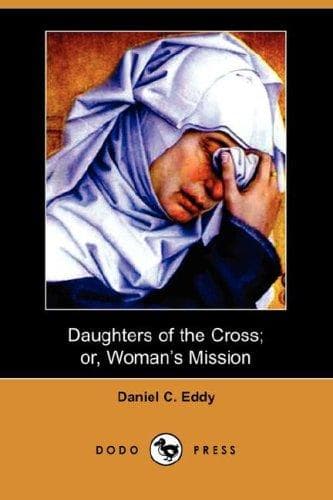
Daughters of the Cross: or Woman's MissionEddy, Daniel C. (Daniel Clarke)
History
Daughters of the Cross: or Woman's Mission
Eddy, Daniel C. (Daniel Clarke)
Women -- Biography; Women missionaries
On the 4th of September, 1843, Miss Hawes was married to Rev. Henry J. Van
Lennep: and, amid familiar scenes and countenances, the father gave his
daughter to her missionary husband, to the toils and sacrifices of a
missionary life. The pious and happy couple immediately started on a short
pleasure tour previous to sailing for the East, where they were to labor
and die. The time which intervened between the joyful marriage service and
the sad departure was crowded with incidents of a thrilling character; and
the month was one of excitement, anxiety, and care.
Mr. Van Lennep was a missionary under the patronage of the American Board
of Commissioners for Foreign Missions. He was destined for Turkey, to which
Oriental clime he was about to take his fair companion. In him Miss Hawes
found a tender and devoted husband, who, when her sickness came and weary
hours were appointed unto her, watched over her with the most considerate
attention, and deprived himself of rest and sleep that he might cheer his
sick and dying companion, whom he had taken from a home of plenty, ease,
refinement, and luxury, and removed to a cheerless and lonely spot, to
labor with him for the perishing.
It required no slight effort for Mrs. Van Lennep to part with so many
familiar scenes and go forth to return no more. There was her mother, whom
she tenderly loved, and whose declining years she had hoped to comfort and
cheer. How could she leave that parent? How could she say "Farewell,"
and do it with the consciousness that she should gaze upon that mild
countenance and that loved form no more? How could she take that hand which
had led her up to womanhood,--a hand which wiped her brow when sick and
suffering, and wet her throbbing temples when pained with fever,--how
could she grasp it for the last time?
Then there was her Sabbath school class, over which she had prayed and
wept, and to the members of which she had imparted instruction so often and
so tenderly.
There was also the house of God, in which she had so often heard the music
of a father's voice; the Sabbath bell, which had so often called her to the
temple and the place of prayer; the organ, whose tones had often thrilled
her soul as she sat with the worshipping assembly, chanting the praise of
God. How could she leave all these? The separation cost an effort such as
those only know who have made the trial.
Public-domain text, read in full here on John Shaqi.
Reviews
Reviews
No reviews yet
Be the first to share your thoughts on this work.
Elsewhere in the archive
Join the Discussion
Join the discussion
Sign in to leave a comment or review.
Sign InorCreate an account