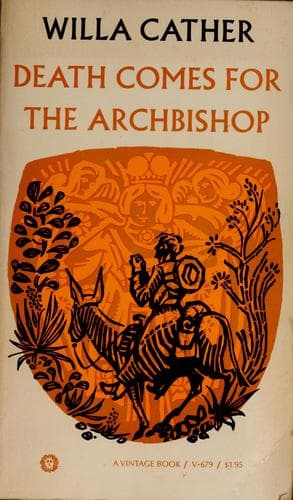
Christian fiction; Clergy -- Fiction; Historical fiction; New Mexico -- Fiction
But the Spanish Fathers who came up to Zuñi, then went north to the
Navajos, west to the Hopis, east to all the pueblos scattered between
Albuquerque and Taos, they came into a hostile country, carrying little
provisionment but their breviary and crucifix. When their mules were
stolen by Indians, as often happened, they proceeded on foot, without a
change of raiment, without food or water. A European could scarcely
imagine such hardships. The old countries were worn to the shape of
human life, made into an investiture, a sort of second body, for man.
There the wild herbs and the wild fruits and the forest fungi were
edible. The streams were sweet water, the trees afforded shade and
shelter. But in the alkali deserts the water holes were poisonous, and
the vegetation offered nothing to a starving man. Everything was dry,
prickly, sharp; Spanish bayonet, juniper, greasewood, cactus; the
lizard, the rattlesnake,--and man made cruel by a cruel life. Those
early missionaries threw themselves naked upon the hard heart of a
country that was calculated to try the endurance of giants. They
thirsted in its deserts, starved among its rocks, climbed up and down
its terrible canyons on stone-bruised feet, broke long fasts by unclean
and repugnant food. Surely these endured _Hunger_, _Thirst_, _Cold_,
_Nakedness_, of a kind beyond any conception St. Paul and his brethren
could have had. Whatever the early Christians suffered, it all happened
in that safe little Mediterranean world, amid the old manners, the old
landmarks. If they endured martyrdom, they died among their brethren,
their relics were piously preserved, their names lived in the mouths of
holy men.
Riding with his Auvergnats to the old missions that had been scenes of
martyrdom, the Bishop used to remind them that no man could know what
triumphs of faith had happened there, where one white man met torture
and death alone among so many infidels, or what visions and revelations
God may have granted to soften that brutal end.
Public-domain text, read in full here on John Shaqi.
Reviews
Reviews
No reviews yet
Be the first to share your thoughts on this work.
Elsewhere in the archive
Join the Discussion
Join the discussion
Sign in to leave a comment or review.
Sign InorCreate an account