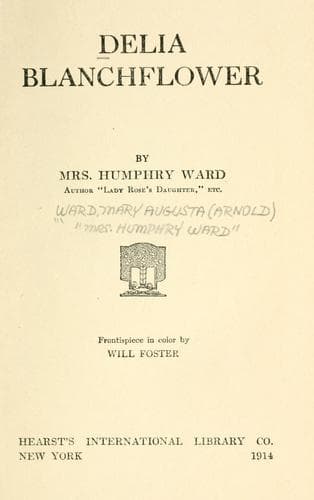
Guardian and ward -- Fiction; Women -- Suffrage -- Great Britain -- Fiction; Young women -- Fiction
He shook his head, smiling.
"I didn't agree with you. I advise you to look up some of those things
you said. But you speak very well. Good-night."
She looked at him angrily, gathered up her skirt with a rattle, in a
small hand, and disappeared.
He presently turned back towards Buckingham Gate, and in a narrow
Westminster street, as he passed the side of a high factory building,
suddenly there emerged from a door-way a number of women and girls, who
had evidently been working over-time. Some of them broke at once into
loud talk and laughter, as though in reaction from the confinement and
tension of their work, some--quite silent--turned their tired faces to
him as they passed him; and some looked boldly, provocatively at the
handsome man, who on his side was clearly observing them. They were of
all types, but the majority of the quite young girls were pale and
stunted, shewing the effect of long hours, and poor food. The coarse or
vicious faces were few; many indeed were marked by a modest or patient
gentleness. The thin line of hurrying forms disappeared into darkness
and distance, some one way, some another; and Winnington was left to
feel that in what he had seen--this everyday incident of a London
street--he had been aptly reminded of what a man who has his occupation
and dwelling amid rural scenes and occupations too readily
forgets--that toiling host of women, married and unmarried, which
modern industry is every day using, or devouring, or wasting. The
stream of lives rushes day by day through the industrial rapids; some
of it passing on to quiet and fruitful channels beyond the roar, and
some lost and churned for ever in the main tumult of the river.
This new claim upon women, on the part of society, in addition to the
old claims of home and motherhood--this vast industrial claim--must it
not change and modify everything in time?--depress old values, create
new? "The vote!--give us the vote! and all will be well. More wages,
more food, more joy, more share in this glorious world!--that's what
the vote means--give us the vote!" Such, in effect, had been the cry
of that half-mad speaker in Whitehall, herself marked and injured by
the economic struggle.
The appeal echoed in Winnington's heart. And Delia seemed to be at his
side, raising her eager eyes to his, pressing him for admission. Had
he, indeed, thought enough of these things?--taken enough to heart this
new and fierce struggle of women with life and circumstance, that is
really involved in the industrial organisation of the modern world?
Public-domain text, read in full here on John Shaqi.
Reviews
Reviews
No reviews yet
Be the first to share your thoughts on this work.
Elsewhere in the archive
Join the Discussion
Join the discussion
Sign in to leave a comment or review.
Sign InorCreate an account