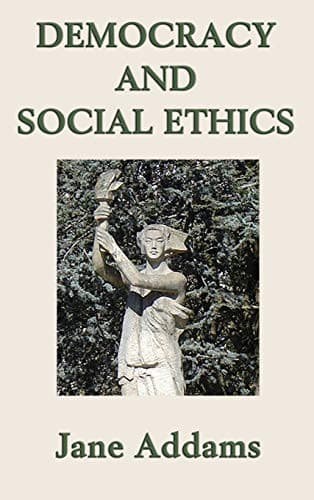
Social ethics; Social sciences; United States -- Social conditions -- 1865-1918
The street-car company which declares that it is impossible to do
business without managing the city council, is on exactly the same moral
level with the man who cannot retain political power unless he has a
saloon, a large acquaintance with the semi-criminal class, and
questionable money with which to debauch his constituents. Both sets of
men assume that the only appeal possible is along the line of
self-interest. They frankly acknowledge money getting as their own
motive power, and they believe in the cupidity of all the men whom they
encounter. No attempt in either case is made to put forward the claims
of the public, or to find a moral basis for action. As the corrupt
politician assumes that public morality is impossible, so many business
men become convinced that to pay tribute to the corrupt aldermen is on
the whole cheaper than to have taxes too high; that it is better to pay
exorbitant rates for franchises, than to be made unwilling partners in
transportation experiments. Such men come to regard political reformers
as a sort of monomaniac, who are not reasonable enough to see the
necessity of the present arrangement which has slowly been evolved and
developed, and upon which business is safely conducted. A reformer who
really knew the people and their great human needs, who believed that
it was the business of government to serve them, and who further
recognized the educative power of a sense of responsibility, would
possess a clew by which he might analyze the situation. He would find
out what needs, which the alderman supplies, are legitimate ones which
the city itself could undertake, in counter-distinction to those which
pander to the lower instincts of the constituency. A mother who eats her
Christmas turkey in a reverent spirit of thankfulness to the alderman
who gave it to her, might be gradually brought to a genuine sense of
appreciation and gratitude to the city which supplies her little
children with a Kindergarten, or, to the Board of Health which properly
placarded a case of scarlet-fever next door and spared her sleepless
nights and wearing anxiety, as well as the money paid with such
difficulty to the doctor and the druggist. The man who in his emotional
gratitude almost kneels before his political friend who gets his boy out
of jail, might be made to see the kindness and good sense of the city
authorities who provided the boy with a playground and reading room,
where he might spend his hours of idleness and restlessness, and through
which his temptations to petty crime might be averted. A man who is
grateful to the alderman who sees that his gambling and racing are not
interfered with, might learn to feel loyal and responsible to the city
which supplied him with a gymnasium and swimming tank where manly and
well-conducted sports are possible. The voter who is eager to serve the
alderman at all times, because the tenure of his job is dependent upon
aldermanic favor, might find great relief and pleasure in working for
Public-domain text, read in full here on John Shaqi.
Reviews
Reviews
No reviews yet
Be the first to share your thoughts on this work.
Elsewhere in the archive
Join the Discussion
Join the discussion
Sign in to leave a comment or review.
Sign InorCreate an account