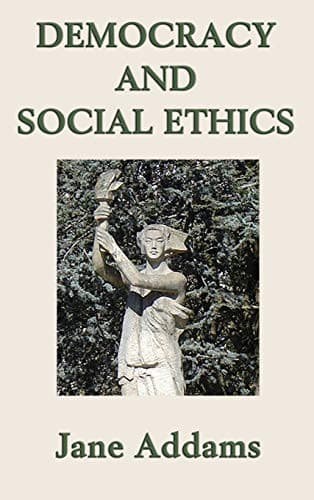
Social ethics; Social sciences; United States -- Social conditions -- 1865-1918
A club will be started for the express purpose of gaining a reputation
for political power which may later be sold out. The president and
executive committee of such a club, who will naturally receive the
funds, promise to divide with "the boys" who swell the size of the
membership. A reform movement is at first filled with recruits who are
active and loud in their assertions of the number of votes they can
"deliver." The reformers are delighted with this display of zeal, and
only gradually find out that many of the recruits are there for the
express purpose of being bought by the other side; that they are most
active in order to seem valuable, and thus raise the price of their
allegiance when they are ready to sell. Reformers seeing them drop away
one by one, talk of desertion from the ranks of reform, and of the power
of money over well-meaning men, who are too weak to withstand
temptation; but in reality the men are not deserters because they have
never actually been enrolled in the ranks. The money they take is
neither a bribe nor the price of their loyalty, it is simply the
consummation of a long-cherished plan and a well-earned reward. They
came into the new movement for the purpose of being bought out of it,
and have successfully accomplished that purpose.
Hull-House assisted in carrying on two unsuccessful campaigns against
the same alderman. In the two years following the end of the first one,
nearly every man who had been prominent in it had received an office
from the reelected alderman. A printer had been appointed to a clerkship
in the city hall; a driver received a large salary for services in the
police barns; the candidate himself, a bricklayer, held a position in
the city construction department. At the beginning of the next
campaign, the greatest difficulty was experienced in finding a
candidate, and each one proposed, demanded time to consider the
proposition. During this period he invariably became the recipient of
the alderman's bounty. The first one, who was foreman of a large
factory, was reported to have been bought off by the promise that the
city institutions would use the product of his firm. The second one, a
keeper of a grocery and family saloon, with large popularity, was
promised the aldermanic nomination on the regular ticket at the
expiration of the term of office held by the alderman's colleague, and
it may be well to state in passing that he was thus nominated and
successfully elected. The third proposed candidate received a place for
his son in the office of the city attorney.
Public-domain text, read in full here on John Shaqi.
Reviews
Reviews
No reviews yet
Be the first to share your thoughts on this work.
Elsewhere in the archive
Join the Discussion
Join the discussion
Sign in to leave a comment or review.
Sign InorCreate an account