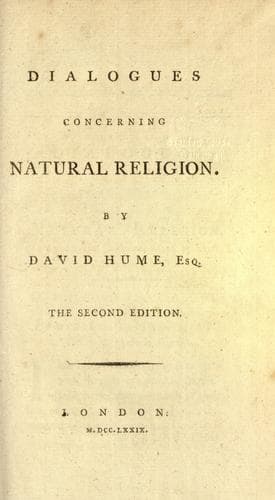
Natural theology -- Early works to 1800; Religion -- Early works to 1800
Admitting your position, replied PHILO, which yet is extremely doubtful,
you must at the same time allow, that if pain be less frequent than
pleasure, it is infinitely more violent and durable. One hour of it is
often able to outweigh a day, a week, a month of our common insipid
enjoyments; and how many days, weeks, and months, are passed by several
in the most acute torments? Pleasure, scarcely in one instance, is ever
able to reach ecstasy and rapture; and in no one instance can it continue
for any time at its highest pitch and altitude. The spirits evaporate,
the nerves relax, the fabric is disordered, and the enjoyment quickly
degenerates into fatigue and uneasiness. But pain often, good God, how
often! rises to torture and agony; and the longer it continues, it
becomes still more genuine agony and torture. Patience is exhausted,
courage languishes, melancholy seizes us, and nothing terminates our
misery but the removal of its cause, or another event, which is the sole
cure of all evil, but which, from our natural folly, we regard with still
greater horror and consternation.
But not to insist upon these topics, continued PHILO, though most
obvious, certain, and important; I must use the freedom to admonish you,
CLEANTHES, that you have put the controversy upon a most dangerous issue,
and are unawares introducing a total scepticism into the most essential
articles of natural and revealed theology. What! no method of fixing a
just foundation for religion, unless we allow the happiness of human
life, and maintain a continued existence even in this world, with all our
present pains, infirmities, vexations, and follies, to be eligible and
desirable! But this is contrary to every one's feeling and experience: It
is contrary to an authority so established as nothing can subvert. No
decisive proofs can ever be produced against this authority; nor is it
possible for you to compute, estimate, and compare, all the pains and all
the pleasures in the lives of all men and of all animals: And thus, by
your resting the whole system of religion on a point, which, from its
very nature, must for ever be uncertain, you tacitly confess, that that
system is equally uncertain.
Public-domain text, read in full here on John Shaqi.
Reviews
Reviews
No reviews yet
Be the first to share your thoughts on this work.
Join the Discussion
Join the discussion
Sign in to leave a comment or review.
Sign InorCreate an account