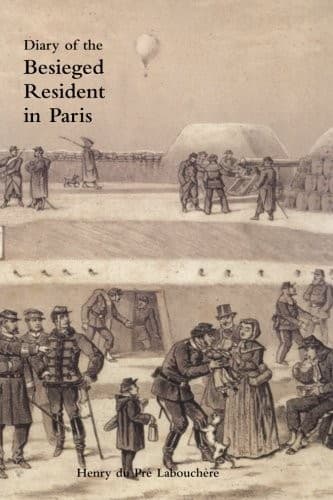
Diary of the Besieged Resident in ParisLabouchere, Henry Du Pré
History
Diary of the Besieged Resident in Paris
Labouchere, Henry Du Pré
Franco-Prussian War, 1870-1871; Paris (France) -- History -- Siege, 1870-1871 -- Personal narratives
defenders of our homes." Sometimes he is encored several times; and were
his audience to let him, I believe that he would continue blessing the
"heroic defenders" until the next morning. The old gentleman has a most
reverent air, and I should imagine in quiet times goes about as a blind
man with a dog. He was turned out of the school in which he was a
professor--a profane disbeliever in all virtue assures me--for being
rather too affectionate towards some of the girls. "I like little
girls--big ones, too," Artemus Ward used to say, and so it appears did
this worthy man. Besides the clubs which I have mentioned, there are
above 100 others. Most of them are kept going by the sous which are
collected for cannon, or some other vague object. Almost all are
usually crowded; the proceedings at most of them are more or less
disorderly; the resolutions carried more or less absurd, and the
speeches more or less bad. With the exception of the Protestant pastors,
and one or two others, I have not heard a single speaker able to talk
connectedly for five minutes. Wild invectives against the Prussians,
denunciations against Europe, abuse of every one who differs from the
orator, and the very tallest of talk about France--what she has done,
what she is doing, and what she will do--form the staple of almost all
the speeches.
_Evening._
I went down to Belleville this afternoon. Everything was quiet. The
people, as usual, in the streets doing nothing. If you can imagine the
whole of Southwark paid and fed by the Government, excused from paying
rent, arrayed in kepis and some sort of uniform, given guns, and passing
almost all the time gossiping, smoking, and idling, you will be able to
form a correct notion of the aspect of Belleville and the other outer
faubourgs. The only demonstration I have heard of has been one composed
of women, who marched down the Rue du Temple behind a red flag, shouting
"Vive la Commune." As far as is yet known, about one-seventh of the
population have voted "No." The army and the Mobiles have almost all
voted "Yes." A friend of mine, who was out driving near Bobigny, says he
was surrounded by a Mobile regiment, who were anxious to know what was
passing in Paris. He asked them how they had voted. "For peace," they
replied. "If the National Guards wish to continue the war, they must
come out here and fight themselves." Many battalions have issued
addresses to the Parisians saying that they will not fight for a
Commune, and that the provinces must have a vote in all decisions as to
the future destinies of France. General Vinoy also has issued an order
to the 13th Corps d'Armee, declaring that if the peace of Paris is
disturbed he will march at its head to put down disorders.
_November 5th._
Public-domain text, read in full here on John Shaqi.
Reviews
Reviews
No reviews yet
Be the first to share your thoughts on this work.
Elsewhere in the archive
Join the Discussion
Join the discussion
Sign in to leave a comment or review.
Sign InorCreate an account