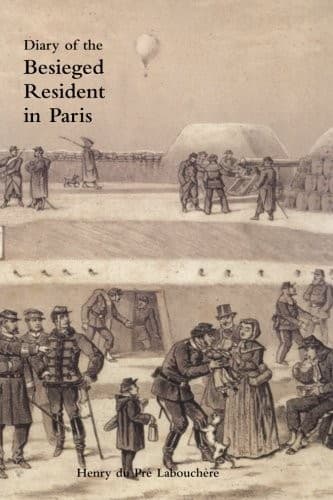
Diary of the Besieged Resident in ParisLabouchere, Henry Du Pré
History
Diary of the Besieged Resident in Paris
Labouchere, Henry Du Pré
Franco-Prussian War, 1870-1871; Paris (France) -- History -- Siege, 1870-1871 -- Personal narratives
_Finita la Comedia._ Let fall the curtain. The siege of Paris is over;
the last balloon has carried our letters through the clouds; the last
shot has been fired. The Prussians are in the forts, and the Prussian
armies are only not in the streets because they prefer to keep watch and
guard outside the vanquished city. What will be the verdict of history
on the defence? Who knows! On the one hand the Parisians have kept a
powerful army at bay far longer than was anticipated; on the other hand,
every sortie that they have made has been unsuccessful--every attempt to
arrest the approach of the besiegers has failed. Passively and inertly
they have allowed their store of provisions to grow less and less, until
they have been forced to capitulate, without their defences having been
stormed, or the cannon silenced. The General complains of his soldiers,
the soldiers complain of their General; and on both sides there is cause
of complaint. Trochu is not a Todleben. His best friends describe him as
a sort of military Hamlet, wise of speech, but weak and hesitating in
action--making plans, and then criticising them instead of accomplishing
them. As a commander, his task was a difficult one; when the siege
commenced he had no army; when the army was formed, it was encompassed
by earthworks and redoubts so strong that even better soldiers would
have failed to carry them. As a statesman, he never was the master of
the situation. He followed rather than led public opinion, and
subordinated everything to the dread of displeasing any section of a
population, which, to be ruled--even in quiet times--must be ruled with
a rod of iron. Success is the criterion of ability in this country, and
poor Trochu is as politically dead as though he never had lived. His
enemies call him a traitor; his friends defend him from the charge by
saying that he is only a vain fool.
Public-domain text, read in full here on John Shaqi.
Reviews
Reviews
No reviews yet
Be the first to share your thoughts on this work.
Elsewhere in the archive
Join the Discussion
Join the discussion
Sign in to leave a comment or review.
Sign InorCreate an account