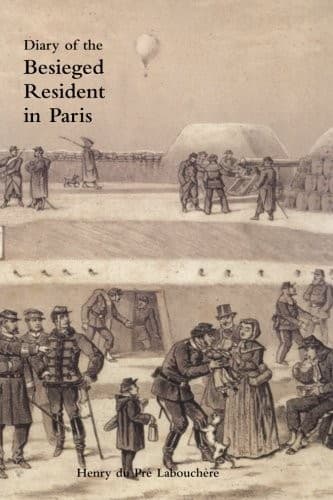
Diary of the Besieged Resident in ParisLabouchere, Henry Du Pré
History
Diary of the Besieged Resident in Paris
Labouchere, Henry Du Pré
Franco-Prussian War, 1870-1871; Paris (France) -- History -- Siege, 1870-1871 -- Personal narratives
The Prussian authorities appear to be deliberately setting to work to
render the armistice as unpleasant to the Parisians as possible, in
order to force them to consent to no matter what terms of peace in order
to get rid of them; and I must congratulate them upon the success of
their efforts. They refuse now to accept passes signed by the Prefect of
the Police, and only recognise those bearing the name of General Valdan,
the chief of the Staff. To-morrow very likely they will require some
fresh signature. Whenever a French railroad company advertises the
departure of a train at a particular hour, comes an order from the
Prussians to alter that hour. Every Frenchman who quits Paris is
subjected to a hundred small, teasing vexations from these military
bureaucrats, and made to feel at every step he takes that he is a
prisoner on leave of absence, and only breathes the air of his native
land by the goodwill of his conquerors. The English public must not
forget that direct postal communications between Paris and foreign
countries are not re-established. Letters from and to England must be
addressed to some agent at Versailles or elsewhere, and from thence
re-addressed to Paris. As in a day or two trains will run pretty
regularly between Paris and London, had our diplomatic wiseacres been
worth in pence what they cost us in pounds, by this time they would have
made some arrangement to ensure a daily mailbag to England leaving
Paris.
News was received yesterday that Gambetta had resigned, and it has been
published this morning in the _Journal Officiel_. A witness of the
Council at which it was agreed to send the three old women of the
Government to Bordeaux to replace him, tells me that everybody kissed
and hugged everybody for half an hour. The old women were ordered to
arrest Gambetta if he attempted resistance. It was much like telling a
street-sweeper to arrest a stalwart Guardsman. "Do not be rash," cried
Trochu. "We will not," replied the old women; "we will remain in one of
the suburbs of Bordeaux, until we learn that we can enter it with
safety." This reply removed from the minds of their friends any fear
that they would incur unnecessary risks in carrying out their mission.
Provisions are arriving pretty freely. All fear of absolute famine has
disappeared. To-day the bread is far better than any we have had of
late. Some sheep and oxen were seen yesterday in the streets.
Public-domain text, read in full here on John Shaqi.
Reviews
Reviews
No reviews yet
Be the first to share your thoughts on this work.
Elsewhere in the archive
Join the Discussion
Join the discussion
Sign in to leave a comment or review.
Sign InorCreate an account