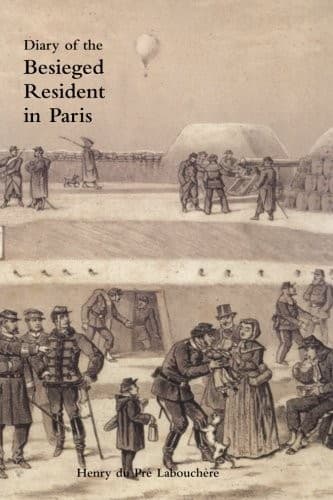
Diary of the Besieged Resident in ParisLabouchere, Henry Du Pré
History
Diary of the Besieged Resident in Paris
Labouchere, Henry Du Pré
Franco-Prussian War, 1870-1871; Paris (France) -- History -- Siege, 1870-1871 -- Personal narratives
chicken every day, or a cut at a joint, and I would ask for nothing
more;" and the Belgravian knight's idea of the discomforts of war is
very like that of the beleaguered Gaul. Want may come, but as yet never
has a large city enjoyed greater abundance of bread and meat. The poor
are nourished by the State. The rich have, perhaps, some difficulty in
getting their supply of meat, but this is the fault of a defective
organization; in reality they are only deprived of those luxuries the
habitual use of which has impaired the digestions of half of them. It is
surely possible to exist for a few weeks on beef, mutton, flour,
preserved vegetables, wine, milk, eggs, and every species of sauce that
cook ever contrived. At about seven, provisions at the restaurants
sometimes run short. I dined to-day at a bouillon at six o'clock for
about half-a-crown. I had soup, salt cod, beef (tolerable, but perhaps a
shade horsey), rabbit, French beans, apple fritters, grapes, and coffee.
This bill of fare is a very long way from starvation.
_October 14th._
According to the official account of yesterday's proceedings, General
Trochu was anxious to discover whether the Prussians were in force upon
the plateau of Chatillon, or had withdrawn from that position. The
villages of Chatillon, Bagneux, and Clamart, were consequently attacked,
and after an artillery and musketry engagement, the Prussian reserves
were brought up, thus proving that the report that they had withdrawn
was unfounded. The retreat then commenced under the fire of the forts.
About 100 prisoners were taken; in the evening they were brought to the
Place Vendome. The newspapers are one and all singing peans over the
valour of the Mobiles--those of the Cote d'Or most distinguished
themselves. Although the whole thing was little more than a
reconnaissance, its effect has been electrical. The battalions of the
National Guard sing the Marseillaise as of old, and everyone is full of
confidence. Some of the officers who were engaged tell me that the
Mobiles really did show coolness under fire, and that they fought well
with the bayonet in the village of Bagneux. Between carrying an advanced
post and forcing the Prussian army to raise the siege, there is of
course a slight difference, but I see no reason why these strong,
healthy peasants should not become excellent troops. What they want are
commanders who are old soldiers, and would force them to submit to
regular discipline. The _Official Gazette_ contains the following
decree: "Every officer of the National Guard whose antecedents are of a
nature to compromise the dignity of the epaulette, and the consideration
of the corps in which he has been elected, can be revoked. The same
punishment may be inflicted upon those officers who render themselves
guilty of continuous bad conduct, or of acts wanting in delicacy. The
revocation will be pronounced by the Government upon a report of the
Minister of War." If the Government has enough determination to carry
Public-domain text, read in full here on John Shaqi.
Reviews
Reviews
No reviews yet
Be the first to share your thoughts on this work.
Elsewhere in the archive
Join the Discussion
Join the discussion
Sign in to leave a comment or review.
Sign InorCreate an account