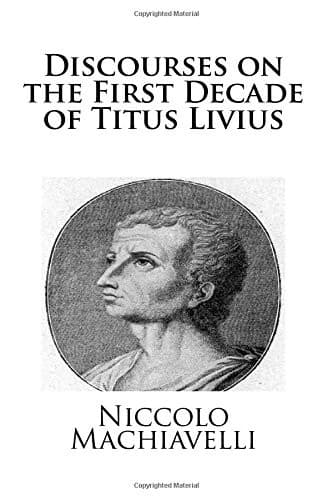
Discourses on the First Decade of Titus LiviusMachiavelli, Niccolò
Philosophy
Discourses on the First Decade of Titus Livius
Machiavelli, Niccolò
Livy. Ab urbe condita; Political science -- Early works to 1800; Rome -- Historiography
We see, too, that in the choice of magistrates a people will choose far
more honestly than a prince; so that while you shall never persuade a
people that it is advantageous to confer dignities on the infamous and
profligate, a prince may readily, and in a thousand ways, be drawn to
do so. Again, it may be seen that a people, when once they have come to
hold a thing in abhorrence, remain for many ages of the same mind;
which we do not find happen with princes. For the truth of both of
which assertions the Roman people are my sufficient witness, who, in
the course of so many hundred years, and in so many elections of
consuls and tribunes, never made four appointments of which they had
reason to repent; and, as I have said, so detested the name of king,
that no obligation they might be under to any citizen who affected that
name, could shield him from the appointed penalty.
Further, we find that those cities wherein the government is in the
hands of the people, in a very short space of time, make marvellous
progress, far exceeding that made by cities which have been always
ruled by princes; as Rome grew after the expulsion of her kings, and
Athens after she freed herself from Pisistratus; and this we can
ascribe to no other cause than that the rule of a people is better than
the rule of a prince.
Nor would I have it thought that anything our historian may have
affirmed in the passage cited, or elsewhere, controverts these my
opinions. For if all the glories and all the defects both of peoples
and of princes be carefully weighed, it will appear that both for
goodness and for glory a people is to be preferred. And if princes
surpass peoples in the work of legislation, in shaping civil
institutions, in moulding statutes, and framing new ordinances, so far
do the latter surpass the former in maintaining what has once been
established, as to merit no less praise than they.
Public-domain text, read in full here on John Shaqi.
Reviews
Reviews
No reviews yet
Be the first to share your thoughts on this work.
Elsewhere in the archive
Join the Discussion
Join the discussion
Sign in to leave a comment or review.
Sign InorCreate an account