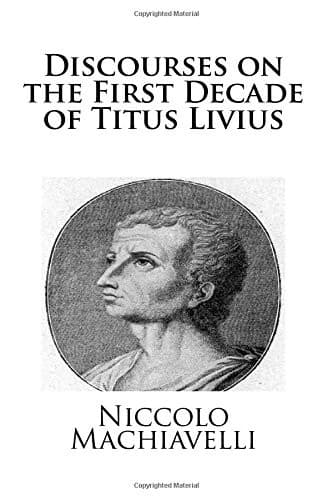
Discourses on the First Decade of Titus LiviusMachiavelli, Niccolò
Philosophy
Discourses on the First Decade of Titus Livius
Machiavelli, Niccolò
Livy. Ab urbe condita; Political science -- Early works to 1800; Rome -- Historiography
Men do always, but not always with reason, commend the past and condemn
the present, and are so much the partisans of what has been, as not
merely to cry up those times which are known to them only from the
records left by historians, but also, when they grow old, to extol the
days in which they remember their youth to have been spent. And
although this preference of theirs be in most instances a mistaken one,
I can see that there are many causes to account for it; chief of which
I take to be that in respect of things long gone by we perceive not the
whole truth, those circumstances that would detract from the credit of
the past being for the most part hidden from us, while all that gives
it lustre is magnified and embellished. For the generality of writers
render this tribute to the good fortune of conquerors, that to make
their achievements seem more splendid, they not merely exaggerate the
great things they have done, but also lend such a colour to the actions
of their enemies, that any one born afterwards, whether in the
conquering or in the conquered country, has cause to marvel at these
men and these times, and is constrained to praise and love them beyond
all others.
Again, men being moved to hatred either by fear or envy, these two most
powerful causes of dislike are cancelled in respect of things which are
past, because what is past can neither do us hurt, nor afford occasion
for envy. The contrary, however, is the case with the things we see,
and in which we take part; for in these, from our complete acquaintance
with them, no part of them being hidden from us, we recognize, along
with much that is good, much that displeases us, and so are forced to
pronounce them far inferior to the old, although in truth they deserve
far greater praise and admiration. I speak not, here, of what relates
to the arts, which have such distinction inherent in them, that time
can give or take from them but little of the glory which they merit of
themselves. I speak of the lives and manners of men, touching which the
grounds for judging are not so clear.
I repeat, then, that it is true that this habit of blaming and praising
obtains, but not always true that it is wrong applied. For sometimes it
will happen that this judgment is just; because, as human affairs are
in constant movement, it must be that they either rise or fall.
Wherefore, we may see a city or province furnished with free
institutions by some great and wise founder, flourish for a while
through his merits, and advance steadily on the path of improvement.
Any one born therein at that time would be in the wrong to praise the
past more than the present, and his error would be occasioned by the
causes already noticed. But any one born afterwards in that city or
province when the time has come for it to fall away from its former
felicity, would not be mistaken in praising the past.
Public-domain text, read in full here on John Shaqi.
Reviews
Reviews
No reviews yet
Be the first to share your thoughts on this work.
Elsewhere in the archive
Join the Discussion
Join the discussion
Sign in to leave a comment or review.
Sign InorCreate an account