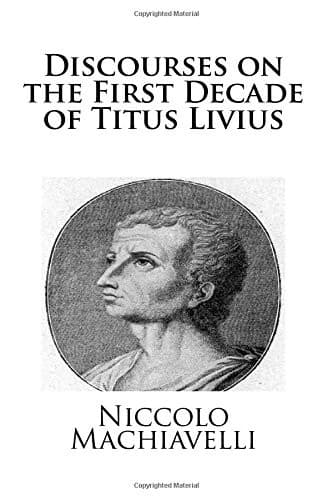
Discourses on the First Decade of Titus LiviusMachiavelli, Niccolò
Philosophy
Discourses on the First Decade of Titus Livius
Machiavelli, Niccolò
Livy. Ab urbe condita; Political science -- Early works to 1800; Rome -- Historiography
But, returning to the matter in hand, it may be said, that if the
judgment of men be at fault in pronouncing whether the present age or
the past is the better in respect of things whereof, by reason of their
antiquity, they cannot have the same perfect knowledge which they have
of their own times, it ought not to be at fault in old men when they
compare the days of their youth with those of their maturity, both of
which have been alike seen and known by them. This were indeed true, if
men at all periods of their lives judged of things in the same way, and
were constantly influenced by the same desires; but since they alter,
the times, although they alter not, cannot but seem different to those
who have other desires, other pleasures, and other ways of viewing
things in their old age from those they had in their youth. For since,
when they grow old, men lose in bodily strength but gain in wisdom and
discernment, it must needs be that those things which in their youth
seemed to them tolerable and good, should in their old age appear
intolerable and evil. And whereas they should ascribe this to their
judgment, they lay the blame upon the times.
But, further, since the desires of men are insatiable, Nature prompting
them to desire all things and Fortune permitting them to enjoy but few,
there results a constant discontent in their minds, and a loathing of
what they possess, prompting them to find fault with the present,
praise the past, and long for the future, even though they be not moved
thereto by any reasonable cause.
I know not, therefore, whether I may not deserve to be reckoned in the
number of those who thus deceive themselves, if, in these Discourses of
mine, I render excessive praise to the ancient times of the Romans
while I censure our own. And, indeed, were not the excellence which
then prevailed and the corruption which prevails now clearer than the
sun, I should proceed more guardedly in what I have to say, from fear
lest in accusing others I should myself fall into this self-deception.
But since the thing is so plain that every one sees it, I shall be bold
to speak freely all I think, both of old times and of new, in order
that the minds of the young who happen to read these my writings, may
be led to shun modern examples, and be prepared to follow those set by
antiquity whenever chance affords the opportunity. For it is the duty
of every good man to teach others those wholesome lessons which the
malice of Time or of Fortune has not permitted him to put in practice;
to the end, that out of many who have the knowledge, some one better
loved by Heaven may be found able to carry them out.
Having spoken, then, in the foregoing Book of the various methods
followed by the Romans in regulating the domestic affairs of their
city, in this I shall speak of what was done by them to spread their
Empire.
CHAPTER I.—_Whether the Empire acquired by the Romans was more due to
Valour or to Fortune_.
Public-domain text, read in full here on John Shaqi.
Reviews
Reviews
No reviews yet
Be the first to share your thoughts on this work.
Elsewhere in the archive
Join the Discussion
Join the discussion
Sign in to leave a comment or review.
Sign InorCreate an account