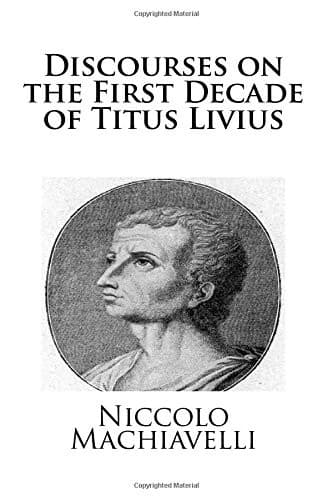
Discourses on the First Decade of Titus LiviusMachiavelli, Niccolò
Philosophy
Discourses on the First Decade of Titus Livius
Machiavelli, Niccolò
Livy. Ab urbe condita; Political science -- Early works to 1800; Rome -- Historiography
The first military commander whose term was extended, was Publius
Philo; for when his consulship was about to expire, he being then
engaged in the siege of Palæopolis, the senate, seeing he had the
victory in his hands, would not displace him by a successor, but
appointed him _Proconsul_, which office he was the first to hold. Now,
although in thus acting the senate did what they thought best for the
public good, nevertheless it was this act of theirs that in time
brought Rome to slavery. For the further the Romans carried their arms,
the more necessary it seemed to them to grant similar extensions of
command, and the oftener they, in fact, did so. This gave rise to two
disadvantages: first that a smaller number of men were trained to
command; second, that by the long continuance of his command a captain
gained so much influence and ascendency over his soldiers that in time
they came to hold the senate of no account, and looked only to him.
This it was, that enabled Sylla and Marius to find adherents ready to
follow them even to the public detriment, and enabled Cæsar to
overthrow the liberties of his country; whereas, had the Romans never
prolonged the period of authority, whether civil or military, though
they might have taken longer to build up their empire, they certainly
had been later in incurring servitude.
CHAPTER XXV.—_Of the poverty of Cincinnatus and of many other Roman
Citizens.
Elsewhere I have shown that no ordinance is of such advantage to a
commonwealth, as one which enforces poverty on its citizens. And
although it does not appear what particular law it was that had this
operation in Rome (especially since we know the agrarian law to have
been stubbornly resisted), we find, as a fact, that four hundred years
after the city was founded, great poverty still prevailed there; and
may assume that nothing helped so much to produce this result as the
knowledge that the path to honours and preferment was closed to none,
and that merit was sought after wheresoever it was to be found; for
this manner of conferring honours made riches the less courted. In
proof whereof I shall cite one instance only.
Public-domain text, read in full here on John Shaqi.
Reviews
Reviews
No reviews yet
Be the first to share your thoughts on this work.
Elsewhere in the archive
Join the Discussion
Join the discussion
Sign in to leave a comment or review.
Sign InorCreate an account