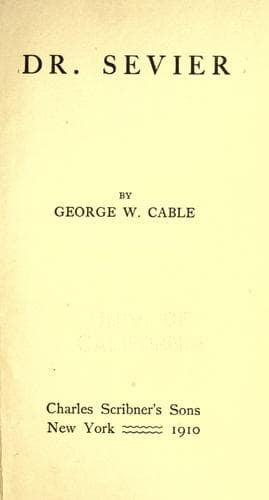
New Orleans (La.) -- Social life and customs -- 19th century -- Fiction; Physicians -- Fiction
At one spot, in a lovely natural grove, where the air was spiced with
the gentle pungency of the young hickory foliage, the train paused a
moment to let off a man in fine gray cloth, whose yellow stripes and one
golden star on the coat-collar indicated a major of cavalry. It seemed
as though pandemonium had opened. Mules braying, negroes yodling, axes
ringing, teamsters singing, men shouting and howling, and all at
nothing; mess-fires smoking all about in the same hap-hazard, but
roomy, disorder in which the trees of the grove had grown; the railroad
side lined with a motley crowd of jolly fellows in spurs, and the
atmosphere between them and the line of heads in the car-windows murky
with the interchange of compliments that flew back and forth from the
"web-foots"[4] to the "critter company," and from the "critter company"
to the "web-foots." As the train moved off, "I say, boys," drawled a
lank, coatless giant on the roadside, with but one suspender and one
spur, "tha-at's right! Gen'l Beerygyard told you to strike fo' yo'
homes, an' I see you' a-doin' it ez fass as you kin git thah." And the
"citizens" in the rear car-windows giggled even at that; while the
"web-foots" he-hawed their derision, and the train went on, as one might
say, with its hands in its pockets, whooping and whistling over the
fields--after the cows; for the day was declining.
[4] Infantry.
Mary was awed. As she had been forewarned to do, she tried not to seem
unaccustomed to, or out of harmony with, all this exuberance. But there
was something so brave in it, coming from a people who were playing a
losing game with their lives and fortunes for their stakes; something so
gallant in it, laughing and gibing in the sight of blood, and smell of
fire, and shortness of food and raiment, that she feared she had
betrayed a stranger's wonder and admiration every time the train
stopped, and the idlers of the station platform lingered about her
window and silently paid their ungraceful but complimentary tribute of
simulated casual glances.
For, with all this jest, it was very plain there was but little joy. It
was not gladness; it was bravery. It was the humor of an invincible
spirit--the gayety of defiance. She could easily see the grim
earnestness beneath the jocund temper, and beneath the unrepining smile
the privation and the apprehension. What joy there was, was a martial
joy. The people were confident of victory at last,--a victorious end,
whatever might lie between, and of even what lay between they would
confess no fear. Richmond was safe, Memphis safer, New Orleans safest.
Yea, notwithstanding Porter and Farragut were pelting away at Forts
Jackson and St. Philip. Indeed, if the rumor be true, if Farragut's
ships had passed those forts, leaving Porter behind, then the Yankee
sea-serpent was cut in two, and there was an end of him in that
direction. Ha! ha!
"Is to-day the twenty-sixth?" asked Mary, at last, of one of the ladies
in real ribbons, leaning over toward her.
Public-domain text, read in full here on John Shaqi.
Reviews
Reviews
No reviews yet
Be the first to share your thoughts on this work.
Elsewhere in the archive
Join the Discussion
Join the discussion
Sign in to leave a comment or review.
Sign InorCreate an account