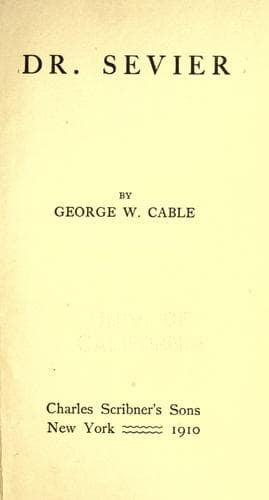
New Orleans (La.) -- Social life and customs -- 19th century -- Fiction; Physicians -- Fiction
But what was the result? The next morning, when Mary and Alice stood
ready for the carriage, and it was high time they were gone, the
carriage was not ready; the horses had got astray in the night. And
while the black coachman was on one horse, which he had found and
caught, and was scouring the neighboring fields and lanes and meadows
in search of the other, there came out from townward upon the still,
country air the long whistle of the departing train; and then the
distant rattle and roar of its far southern journey began, and then
its warning notes to the scattering colts and cattle.
"Look away!"--it seemed to sing--"Look away!"--the notes fading,
failing, on the ear,--"away--away--away down south in Dixie,"--the last
train that left for New Orleans until the war was over.
CHAPTER LVI.
FIRE AND SWORD.
The year the war began dates also, for New Orleans, the advent of two
better things: street-cars and the fire-alarm telegraph. The frantic
incoherence of the old alarum gave way to the few solemn, numbered
strokes that called to duty in the face of hot danger, like the electric
voice of a calm commander. The same new system also silenced, once for
all, the old nine-o'clock gun. For there were not only taps to signify
each new fire-district,--one for the first, two for the second, three,
four, five, six seven, eight, and nine,--but there was also one lone
toll at mid-day for the hungry mechanic, and nine at the evening hour
when the tired workman called his children in from the street and turned
to his couch, and the slave must show cause in a master's handwriting
why he or she was not under that master's roof.
And then there was one signal more. Fire is a dreadful thing, and all
the alarm signals were for fire except this one. Yet the profoundest
wish of every good man and tender women in New Orleans, when this
pleasing novelty of electro-magnetic warnings was first published for
the common edification, was that mid-day or midnight, midsummer or
midwinter, let come what might of danger or loss or distress, that one
particular signal might not sound. Twelve taps. Anything but that.
Public-domain text, read in full here on John Shaqi.
Reviews
Reviews
No reviews yet
Be the first to share your thoughts on this work.
Elsewhere in the archive
Join the Discussion
Join the discussion
Sign in to leave a comment or review.
Sign InorCreate an account