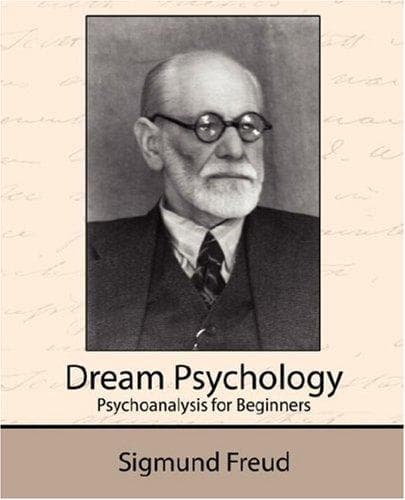
Dream Psychology: Psychoanalysis for BeginnersFreud, Sigmund
Science
Dream Psychology: Psychoanalysis for Beginners
Freud, Sigmund
Dreams; Psychoanalysis
Ladd, we are nevertheless able to explain this excitement through the
regressive revival of active memories behind the dream. A modest part in
our conception has also been assigned to the inner organic sensations
which are wont to be taken as the cardinal point in the explanation of
the dream. These--the sensation of falling, flying, or inhibition--stand
as an ever ready material to be used by the dream-work to express the
dream thought as often as need arises.
That the dream process is a rapid and momentary one seems to be true for
the perception through consciousness of the already prepared dream
content; the preceding parts of the dream process probably take a slow,
fluctuating course. We have solved the riddle of the superabundant dream
content compressed within the briefest moment by explaining that this is
due to the appropriation of almost fully formed structures from the
psychic life. That the dream is disfigured and distorted by memory we
found to be correct, but not troublesome, as this is only the last
manifest operation in the work of disfigurement which has been active
from the beginning of the dream-work. In the bitter and seemingly
irreconcilable controversy as to whether the psychic life sleeps at
night or can make the same use of all its capabilities as during the
day, we have been able to agree with both sides, though not fully with
either. We have found proof that the dream thoughts represent a most
complicated intellectual activity, employing almost every means
furnished by the psychic apparatus; still it cannot be denied that these
dream thoughts have originated during the day, and it is indispensable
to assume that there is a sleeping state of the psychic life. Thus, even
the theory of partial sleep has come into play; but the characteristics
of the sleeping state have been found not in the dilapidation of the
psychic connections but in the cessation of the psychic system
dominating the day, arising from its desire to sleep. The withdrawal
from the outer world retains its significance also for our conception;
though not the only factor, it nevertheless helps the regression to make
possible the representation of the dream. That we should reject the
voluntary guidance of the presentation course is uncontestable; but the
psychic life does not thereby become aimless, for we have seen that
after the abandonment of the desired end-presentation undesired ones
gain the mastery. The loose associative connection in the dream we have
not only recognized, but we have placed under its control a far greater
territory than could have been supposed; we have, however, found it
merely the feigned substitute for another correct and senseful one. To
be sure we, too, have called the dream absurd; but we have been able to
learn from examples how wise the dream really is when it simulates
absurdity. We do not deny any of the functions that have been attributed
to the dream. That the dream relieves the mind like a valve, and that,
Public-domain text, read in full here on John Shaqi.
Reviews
Reviews
No reviews yet
Be the first to share your thoughts on this work.
Elsewhere in the archive
Join the Discussion
Join the discussion
Sign in to leave a comment or review.
Sign InorCreate an account