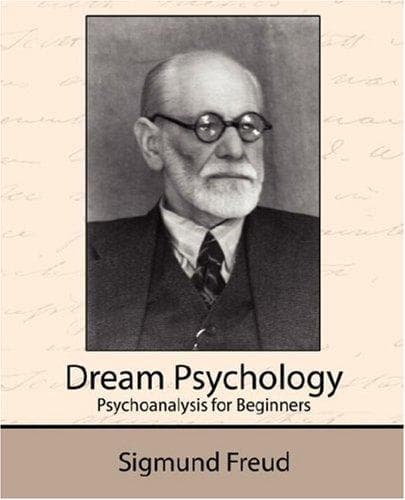
Dream Psychology: Psychoanalysis for BeginnersFreud, Sigmund
Science
Dream Psychology: Psychoanalysis for Beginners
Freud, Sigmund
Dreams; Psychoanalysis
The philosophers, who have learned that correct and highly complicated
thought structures are possible even without the cooeperation of
consciousness, have found it difficult to attribute any function to
consciousness; it has appeared to them a superfluous mirroring of the
perfected psychic process. The analogy of our Cons. system with the
systems of perception relieves us of this embarrassment. We see that
perception through our sensory organs results in directing the
occupation of attention to those paths on which the incoming sensory
excitement is diffused; the qualitative excitement of the P-system
serves the mobile quantity of the psychic apparatus as a regulator for
its discharge. We may claim the same function for the overlying sensory
organ of the Cons. system. By assuming new qualities, it furnishes a new
contribution toward the guidance and suitable distribution of the mobile
occupation quantities. By means of the perceptions of pleasure and pain,
it influences the course of the occupations within the psychic
apparatus, which normally operates unconsciously and through the
displacement of quantities. It is probable that the principle of pain
first regulates the displacements of occupation automatically, but it is
quite possible that the consciousness of these qualities adds a second
and more subtle regulation which may even oppose the first and perfect
the working capacity of the apparatus by placing it in a position
contrary to its original design for occupying and developing even that
which is connected with the liberation of pain. We learn from
neuropsychology that an important part in the functional activity of the
apparatus is attributed to such regulations through the qualitative
excitation of the sensory organs. The automatic control of the primary
principle of pain and the restriction of mental capacity connected with
it are broken by the sensible regulations, which in their turn are again
automatisms. We learn that the repression which, though originally
expedient, terminates nevertheless in a harmful rejection of inhibition
and of psychic domination, is so much more easily accomplished with
reminiscences than with perceptions, because in the former there is no
increase in occupation through the excitement of the psychic sensory
organs. When an idea to be rejected has once failed to become conscious
because it has succumbed to repression, it can be repressed on other
occasions only because it has been withdrawn from conscious perception
on other grounds. These are hints employed by therapy in order to bring
about a retrogression of accomplished repressions.
Public-domain text, read in full here on John Shaqi.
Reviews
Reviews
No reviews yet
Be the first to share your thoughts on this work.
Elsewhere in the archive
Join the Discussion
Join the discussion
Sign in to leave a comment or review.
Sign InorCreate an account