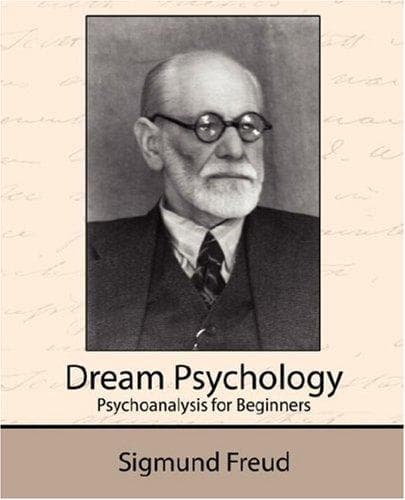
Dream Psychology: Psychoanalysis for BeginnersFreud, Sigmund
Science
Dream Psychology: Psychoanalysis for Beginners
Freud, Sigmund
Dreams; Psychoanalysis
has brought to light if we reword our formula as follows: _The dream is
the (disguised) fulfillment of a (suppressed, repressed) wish_.
Now there still remain as a particular species of dreams with painful
content, dreams of anxiety, the inclusion of which under dreams of
wishing will find least acceptance with the uninitiated. But I can
settle the problem of anxiety dreams in very short order; for what they
may reveal is not a new aspect of the dream problem; it is a question in
their case of understanding neurotic anxiety in general. The fear which
we experience in the dream is only seemingly explained by the dream
content. If we subject the content of the dream to analysis, we become
aware that the dream fear is no more justified by the dream content than
the fear in a phobia is justified by the idea upon which the phobia
depends. For example, it is true that it is possible to fall out of a
window, and that some care must be exercised when one is near a window,
but it is inexplicable why the anxiety in the corresponding phobia is so
great, and why it follows its victims to an extent so much greater than
is warranted by its origin. The same explanation, then, which applies to
the phobia applies also to the dream of anxiety. In both cases the
anxiety is only superficially attached to the idea which accompanies it
and comes from another source.
On account of the intimate relation of dream fear to neurotic fear,
discussion of the former obliges me to refer to the latter. In a little
essay on "The Anxiety Neurosis,"[6] I maintained that neurotic fear has
its origin in the sexual life, and corresponds to a libido which has
been turned away from its object and has not succeeded in being applied.
From this formula, which has since proved its validity more and more
clearly, we may deduce the conclusion that the content of anxiety dreams
is of a sexual nature, the libido belonging to which content has been
transformed into fear.
[1] To sit for the painter. Goethe: "And if he has no backside, how can
the nobleman sit?"
[2] I myself regret the introduction of such passages from the
psychopathology of hysteria, which, because of their fragmentary
representation and of being torn from all connection with the subject,
cannot have a very enlightening influence. If these passages are capable
of throwing light upon the intimate relations between the dream and the
psychoneuroses, they have served the purpose for which I have taken them
up.
[3] Something like the smoked salmon in the dream of the deferred
supper.
[4] It often happens that a dream is told incompletely, and that a
recollection of the omitted portions appear only in the course of the
analysis. These portions subsequently fitted in, regularly furnish the
key to the interpretation. _Cf._ below, about forgetting in dreams.
Public-domain text, read in full here on John Shaqi.
Reviews
Reviews
No reviews yet
Be the first to share your thoughts on this work.
Join the Discussion
Join the discussion
Sign in to leave a comment or review.
Sign InorCreate an account