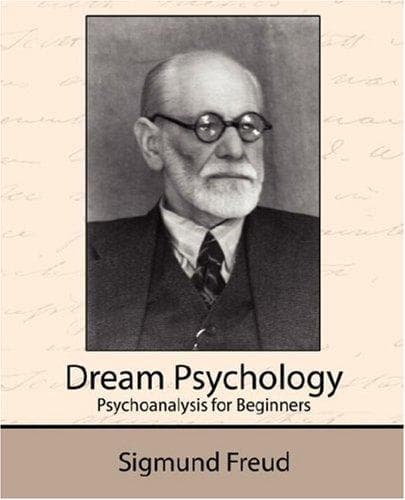
Dream Psychology: Psychoanalysis for BeginnersFreud, Sigmund
Science
Dream Psychology: Psychoanalysis for Beginners
Freud, Sigmund
Dreams; Psychoanalysis
Robbers, burglars at night, and ghosts, of which we are afraid before
going to bed, and which occasionally even disturb our sleep, originate
in one and the same childish reminiscence. They are the nightly visitors
who have awakened the child to set it on the chamber so that it may not
wet the bed, or have lifted the cover in order to see clearly how the
child is holding its hands while sleeping. I have been able to induce an
exact recollection of the nocturnal visitor in the analysis of some of
these anxiety dreams. The robbers were always the father, the ghosts
more probably corresponded to feminine persons with white night-gowns.
When one has become familiar with the abundant use of symbolism for the
representation of sexual material in dreams, one naturally raises the
question whether there are not many of these symbols which appear once
and for all with a firmly established significance like the signs in
stenography; and one is tempted to compile a new dream-book according to
the cipher method. In this connection it may be remarked that this
symbolism does not belong peculiarly to the dream, but rather to
unconscious thinking, particularly that of the masses, and it is to be
found in greater perfection in the folklore, in the myths, legends, and
manners of speech, in the proverbial sayings, and in the current
witticisms of a nation than in its dreams.
The dream takes advantage of this symbolism in order to give a disguised
representation to its latent thoughts. Among the symbols which are used
in this manner there are of course many which regularly, or almost
regularly, mean the same thing. Only it is necessary to keep in mind the
curious plasticity of psychic material. Now and then a symbol in the
dream content may have to be interpreted not symbolically, but according
to its real meaning; at another time the dreamer, owing to a peculiar
set of recollections, may create for himself the right to use anything
whatever as a sexual symbol, though it is not ordinarily used in that
way. Nor are the most frequently used sexual symbols unambiguous every
time.
Public-domain text, read in full here on John Shaqi.
Reviews
Reviews
No reviews yet
Be the first to share your thoughts on this work.
Elsewhere in the archive
Join the Discussion
Join the discussion
Sign in to leave a comment or review.
Sign InorCreate an account