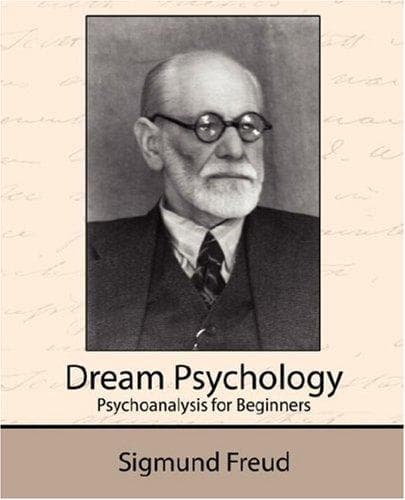
Dream Psychology: Psychoanalysis for BeginnersFreud, Sigmund
Science
Dream Psychology: Psychoanalysis for Beginners
Freud, Sigmund
Dreams; Psychoanalysis
This primitive mental activity must have been modified by bitter
practical experience into a more expedient secondary activity. The
establishment of the identity perception on the short regressive road
within the apparatus does not in another respect carry with it the
result which inevitably follows the revival of the same perception from
without. The gratification does not take place, and the want continues.
In order to equalize the internal with the external sum of energy, the
former must be continually maintained, just as actually happens in the
hallucinatory psychoses and in the deliriums of hunger which exhaust
their psychic capacity in clinging to the object desired. In order to
make more appropriate use of the psychic force, it becomes necessary to
inhibit the full regression so as to prevent it from extending beyond
the image of memory, whence it can select other paths leading ultimately
to the establishment of the desired identity from the outer world. This
inhibition and consequent deviation from the excitation becomes the
task of a second system which dominates the voluntary motility, _i.e._
through whose activity the expenditure of motility is now devoted to
previously recalled purposes. But this entire complicated mental
activity which works its way from the memory picture to the
establishment of the perception identity from the outer world merely
represents a detour which has been forced upon the wish-fulfillment by
experience.[2] Thinking is indeed nothing but the equivalent of the
hallucinatory wish; and if the dream be called a wish-fulfillment this
becomes self-evident, as nothing but a wish can impel our psychic
apparatus to activity. The dream, which in fulfilling its wishes follows
the short regressive path, thereby preserves for us only an example of
the primary form of the psychic apparatus which has been abandoned as
inexpedient. What once ruled in the waking state when the psychic life
was still young and unfit seems to have been banished into the sleeping
state, just as we see again in the nursery the bow and arrow, the
discarded primitive weapons of grown-up humanity. _The dream is a
fragment of the abandoned psychic life of the child._ In the psychoses
these modes of operation of the psychic apparatus, which are normally
suppressed in the waking state, reassert themselves, and then betray
their inability to satisfy our wants in the outer world.
Public-domain text, read in full here on John Shaqi.
Reviews
Reviews
No reviews yet
Be the first to share your thoughts on this work.
Elsewhere in the archive
Join the Discussion
Join the discussion
Sign in to leave a comment or review.
Sign InorCreate an account