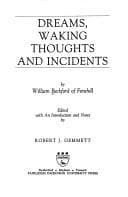
Dreams, Waking Thoughts, and IncidentsBeckford, William
General
Dreams, Waking Thoughts, and Incidents
Beckford, William
Beckford, William, 1760-1844
After we had breakfasted by the light of our fire (for the casements
admitted but a very feeble gleam), I sat down to the works of St. Bruno;
of all medleys the strangest. Allegories without end: a
theologico-natural history of birds, beasts, and fishes: several chapters
on paradise; the delights of solitude; the glory of Solomon’s temple; the
new Jerusalem; and numberless other wonderful subjects, full of
enthusiasm and superstition.
Saint Bruno was certainly a mighty genius; I admire the motives which
drew him to this desert; but perhaps before we come to that part of the
story, you will like to know what preceded it. My Saint (for Bruno has
succeeded Thomas of Canterbury) was of noble descent, and possessed
considerable wealth. He was not less remarkable for the qualities of his
mind, and his talents gained him the degree of Master of the great
sciences in the University of Rheims; here he contracted a friendship
with Odo, afterwards Urban the Second. Being always poetic, singular,
and visionary, he soon grew disgusted with the world, and began early in
life to sigh after retirement. His residence at Grenoble, where he was
invited by Hugo, its bishop, determined him to the monastic state.
This venerable prelate imparted to him a vision in which he seemed to
behold the desert and mountain beyond his city visible in the dead of
night by the streaming of seven lucid stars that hung directly over them.
Whilst he was ardently gazing at this wonder, a still voice was heard
declaring it the future abode of Bruno—by him to be consecrated as a
retirement for holy men desirous of holding converse with their God. No
shepherd’s pipe was to be heard within these precincts; no huntsman’s
profane feet to tread these silent regions, which were to be dedicated
solely to their Creator; no woman was to ascend this mountain, nor
violate by her allurements the sacred repose of its inhabitants.
Such were the first institutions of the order as the inspired Bishop of
Grenoble delivered them to Bruno, who selecting a few persons that, like
himself, contemned the splendours of the world and the charms of society,
repaired with them to this spot; and, in the darkest parts of the forests
which shade the most gloomy recesses of the mountains, founded the first
convent of Carthusians, long since destroyed.
Several years passed away, whilst Bruno was employed in actions of the
most exalted piety; and, the fame of his exemplary conduct reaching Rome
(where his friend had been lately invested with the papal tiara), the
whole conclave was desirous of seeing him, and entreated Urban to invite
him to Rome. The request of Christ’s vicegerent was not to be refused;
and Bruno quitted his beloved solitude, leaving some of his disciples
behind, who propagated his doctrines, and tended zealously the infant
order.
The pomp of the Roman court soon disgusted the rigid Bruno, who had
weaned himself entirely from worldly affections.
Public-domain text, read in full here on John Shaqi.
Reviews
Reviews
No reviews yet
Be the first to share your thoughts on this work.
Elsewhere in the archive
Join the Discussion
Join the discussion
Sign in to leave a comment or review.
Sign InorCreate an account