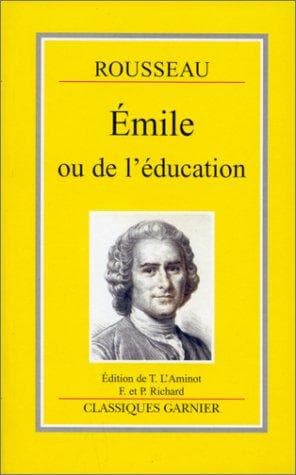
A child has only two distinct feelings, joy and sorrow; he laughs
or he cries; he knows no middle course, and he is constantly passing
from one extreme to the other. On account of these perpetual changes
there is no lasting impression on the face, and no expression; but
when the child is older and more sensitive, his feelings are keener
or more permanent, and these deeper impressions leave traces more
difficult to erase; and the habitual state of the feelings has an
effect on the features which in course of time becomes ineffaceable.
Still it is not uncommon to meet with men whose expression varies
with their age. I have met with several, and I have always found
that those whom I could observe and follow had also changed their
habitual temper. This one observation thoroughly confirmed would
seem to me decisive, and it is not out of place in a treatise on
education, where it is a matter of importance, that we should learn
to judge the feelings of the heart by external signs.
I do not know whether my young man will be any the less amiable
for not having learnt to copy conventional manners and to feign
sentiments which are not his own; that does not concern me at
present, I only know he will be more affectionate; and I find it
difficult to believe that he, who cares for nobody but himself,
can so far disguise his true feelings as to please as readily as he
who finds fresh happiness for himself in his affection for others.
But with regard to this feeling of happiness, I think I have said
enough already for the guidance of any sensible reader, and to show
that I have not contradicted myself.
Public-domain text, read in full here on John Shaqi.
Reviews
Reviews
No reviews yet
Be the first to share your thoughts on this work.
Elsewhere in the archive
Join the Discussion
Join the discussion
Sign in to leave a comment or review.
Sign InorCreate an account