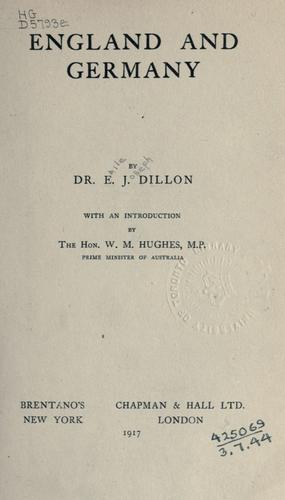
Germany -- Foreign relations; World War, 1914-1918; World War, 1914-1918 -- Economic aspects
Trains, needed to supply the fighting men at the front with food and
the wounded at the rear with medicaments, were kept back to suit the
schemes of these greedy cormorants. Gratuities, it is openly affirmed,
had to be paid by Red Cross and other officers to those subordinate
railway servants who had it in their power to send on a train or shunt
it off for days on a side-track. Bribery is working havoc in the
Tsardom. In January 1916 the Moscow municipality discussed the
advisability of voting a certain sum of money and putting it at the
disposal of the chief officer of the city, to be discreetly employed
in transactions with complacent railway officials, in order to further
the work of reducing prices on necessaries of life. The motive adduced
for this homoeopathic way of treating a social distemper were the
conditions of life in Russia and the necessity of complying with them.
But as the Statute Book does not recognize these conditions and
condemns bribery absolutely, a vote on the subject was not taken.[124]
[124] The German press gave great prominence to this item of
news. Cf. _Frankfurter Zeitung_, January 8, 1916.
Acting on instructions issued by the Finance Minister, a Member of the
Council of the Finance Ministry, D. I. Zassiadko, visited the
Kharkoff circuit for the purpose of studying the bribery problem on
the spot. M. Zassiadko acquired the conviction "on the spot" that the
railway officials do really take bribes, "and even of considerable
amounts." But, that ascertained, the representative of the Ministry
decided to delve deeper to the root of the matter. And he reached the
conclusion that railway servants belong to the class of the tempted.
The evil, he reported, resides not in the circumstance that they take
bribes, but that bribes are offered whereby these weak little souls
are seduced. The representative of the Ministry discovered an entire
category of bribes which do not bear the signs of extortion, but only
of "gratitude." To us this conclusion sounds somewhat naive. The most
widely circulated journal of Petrograd prefaces an article on the
subject as follows.[125]
[125] _The Bourse Gazette_, February 21.
Public-domain text, read in full here on John Shaqi.
Reviews
Reviews
No reviews yet
Be the first to share your thoughts on this work.
Elsewhere in the archive
Join the Discussion
Join the discussion
Sign in to leave a comment or review.
Sign InorCreate an account