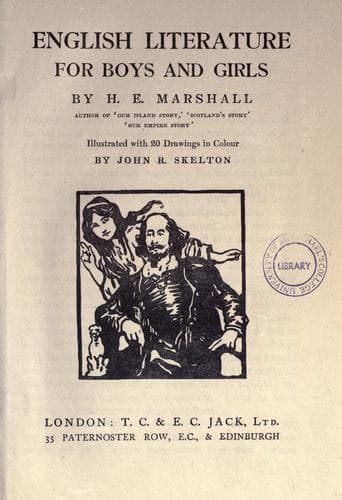
English Literature for Boys and GirlsMarshall, H. E. (Henrietta Elizabeth)
History
English Literature for Boys and Girls
Marshall, H. E. (Henrietta Elizabeth)
English literature -- History and criticism
Ungentle men! they cannot thrive
who killed thee. Thou ne'er didst alive
Them any harm: alas! nor could
Thy death yet do them any good.
. . . . .
With sweetest milk and sugar, first
I it at my own fingers nurs'd;
And as it grew, so every day
It wax'd more sweet and white than they.
It had so sweet a breath! And oft
I blushed to see its foot so soft,
And white (shall I say than my hand?)
Nay, any lady's of the land.
It is a wondrous thing how fleet
'Twas on those little silver feet;
With what a pretty skipping grace
It oft would challenge me to race;
And when 't had left me far away,
'Twould stay, and run again, and stay;
For it was nimbler much than hinds,
And trod as if on the four winds.
I have a garden of my own,
But so with roses overgrown
And lilies, that you would it guess
To be a little wilderness;
And all the spring-time of the year
It only loved to be there.
Among the lilies, I
Have sought it oft, where it should lie
Yet could not, till itself would rise,
Find it, although before mine eyes;
For in the flaxen lilies' shade,
It like a bank of lilies laid.
Upon the roses it would feed,
Until its lips even seemed to bleed;
And then to me 'twould boldly trip
And plant those roses on my lip.
. . . . .
Now my sweet fawn in vanish'd to
Whither the swans and turtles go;
In fair Elysium to endure,
With milk-white lambs and ermines pure,
O do not run too fast: for I
Will but bespeak thy grave, and die."
After the Restoration Marvell wrote satires, a kind of poem of
which you had an early and mild example in the fable of the two
mice by Surrey, a kind of poem of which we will soon hear much
more. In these satires Marvell poured out all the wrath of a
Puritan upon the evils of his day. Marvell's satires were so
witty and so outspoken that once or twice he was in danger of
punishment because of them. But once at least the King himself
saved a book of his from being destroyed, for by every one "from
the King down to the tradesman his books were read with great
pleasure."* Yet he had many enemies, and when he died suddenly
in August, 1678, many people though that he had been poisoned.
He was the last, we may say, of the seventeenth-century lyric
poets.
*Burnet.
Public-domain text, read in full here on John Shaqi.
Reviews
Reviews
No reviews yet
Be the first to share your thoughts on this work.
Elsewhere in the archive
Join the Discussion
Join the discussion
Sign in to leave a comment or review.
Sign InorCreate an account