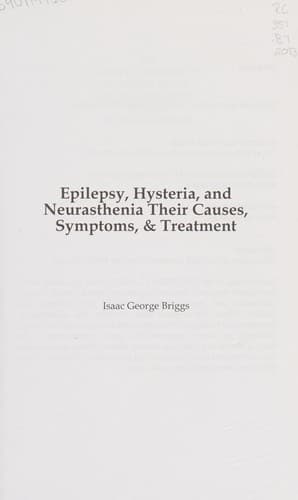
Epilepsy, Hysteria, and Neurasthenia: Their Causes, Symptoms, & TreatmentBriggs, Isaac George
Science
Epilepsy, Hysteria, and Neurasthenia: Their Causes, Symptoms, & Treatment
Briggs, Isaac George
Epilepsy; Hysteria; Nervous system -- Diseases; Neurasthenia
Magnify his virtues and be tenderly charitable to his many frailties, for
he is "not as other men" and too well he knows it. Love at its best is so
complex that it easily goes awry, but death will one day dissolve all its
complexity, and when, maybe after "many a weary mile"
"The voice of him I loved is still,
The restless brain is quiet,
The troubled heart has ceased to beat
And the tainted blood to riot"--
it will comfort you to reflect that you did your duty and, to best the of
your ability, fulfilled your solemn pledge to love and honour him.
To quote George Eliot:
"What greater reward can thou desire than the proud consciousness that
you have strengthened him in all labour, comforted him in all sorrow,
ministered to him in all pain, and been with him in silent but
unspeakably holy memories at the moment of eternal parting?"
Surely, none!
We have considered the mournful case of a wife with a neuropathic husband,
and must now say a few words about the truly distressing fate of a husband
afflicted with a neuropathic wife, for neuropathy in its unpleasant
consequences to others is far worse in woman than in man.
A man is at work all day, and his mind is perforce distracted from his
woes, and, though he retails them at night to the home circle, they get so
used to them as to disregard them, proffering a few words of agreement,
sympathy or scorn quite automatically.
With women the distraction of work is not so complete, for housework can be
neglected, there are always neighbours and friends to listen to tales of
woe and thus generate a very harmful self-pity, and women are not content
to enumerate their woes, but demand the attention and sympathy of all
listeners.
Many of the facts in the foregoing parts of this chapter apply with equal
force to both sexes, but women being usually more patient, tactful,
resigned and self-sacrificing than men, can--and often do--alleviate the
lot of the male neuropath; whereas the absence of these qualities in the
average man means that he aggravates, instead of alleviating, the lot of
any female neuropath to whom he may be wedded.
Having taken her "for better, for worse" he will find her irritating,
unreasonable, and unfitted to shoulder domestic responsibilities. Her likes
and dislikes, fickle fancies, unreasonable prejudices, selfish ways will
cause trouble; he must be prepared for misunderstandings and feuds with
relatives and friends, and on reaching home tired and worried, he is like
to find his house in disorder, be assailed by a tale of woe, and perhaps
find that his wife's vagaries have involved him in a tiff with neighbours.
She will be fretful, exacting, impatient, and given to ready tears.
Sensitive to the last degree, she will see slights where none are intended,
and a chiding word, a reproachful look, or a weary sigh will mean a fit of
temper or depression.
Public-domain text, read in full here on John Shaqi.
Reviews
Reviews
No reviews yet
Be the first to share your thoughts on this work.
Elsewhere in the archive
Join the Discussion
Join the discussion
Sign in to leave a comment or review.
Sign InorCreate an account