fiery tongues of the Holy Ghost over the Apostles' heads. Then there
shall be no longer slaves and masters; no maimed or cripples; no
malice, no vices, no pity, no hate. Men shall be gods. How shall I
dare to deceive, insult, or ill-treat another man, in whom I see and
feel my fellow, who, like myself, is a god? Then, and then only, shall
life be rich and beautiful.... Our daily life shall be a pleasurable
toil, an enfranchised science, a wonderful music, an everlasting
merrymaking. Love, free and sovereign, shall become the world's
religion."
In considering Russian novelists of to-day, and the promise for the
future, Andreev seems to be the man best worth watching--he is the
most gifted artist of them all. But it is clear that no new writer has
appeared in Russia since the death of Dostoevski in 1881 who can
compare for an instant with the author of "Anna Karenina," and that
the great names in Russian fiction are now, as they were forty years
ago, Gogol, Turgenev, Tolstoi, and Dostoevski. Very few long novels
have been published in Russia since "Resurrection" that, so far as we
can judge, have permanent value. Gorki's novels are worthless; his
power, like that of Chekhov and Andreev, is seen to best advantage in
the short story. Perhaps the younger school have made a mistake in
studying so exclusively the abnormal.
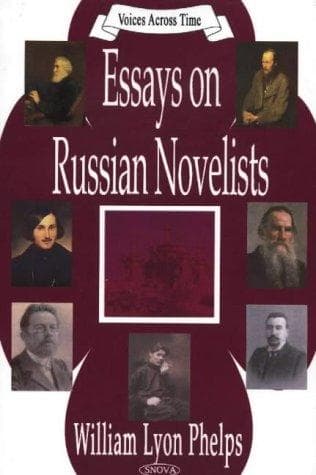
End of Project Gutenberg's Essays on Russian Novelists, by William Lyon Phelps
Public-domain text, read in full here on John Shaqi.
Reviews
Reviews
No reviews yet
Be the first to share your thoughts on this work.
Elsewhere in the archive
Join the Discussion
Join the discussion
Sign in to leave a comment or review.
Sign InorCreate an account