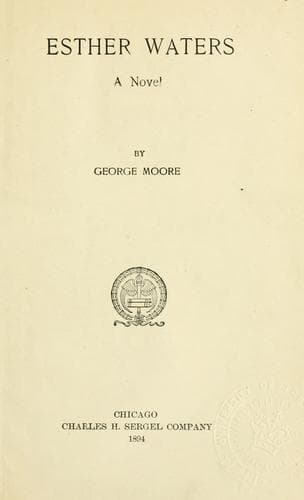
Domestic fiction; England -- Fiction; Mothers and sons -- Fiction; Unmarried mothers -- Fiction; Women household employees -- Fiction
Jackie looked as if he would like to hear about "foreign parts," and
William awaited the question that seemed to tremble on the child's lips.
But, instead, he turned suddenly to Mrs. Lewis and said--
"The cakes aren't burnt, are they? I ran as fast as I could the moment I
saw them coming."
The childish abruptness of the transition made them laugh, and an
unpleasant moment passed away. Mrs. Lewis took the plate of cakes from the
fender and poured out their tea. The door and window were open, and the
dying light lent a tenderness to the tea table, to the quiet solicitude of
the mother watching her son, knowing him in all his intimate habits; to
the eager curiosity of the father on the other side, leaning forward
delighted at every look and word, thinking it all astonishing, wonderful.
Jackie sat between the women. He seemed to understand that his chance of
eating as many tea-cakes as he pleased had come, and he ate with his eyes
fixed on the plate, considering which piece he would have when he had
finished the piece he had in his hand. Little was said--a few remarks
about the fine weather, and offers to put out another cup of tea. By their
silence Mrs. Lewis began to understand that they had differences to
settle, and that she had better leave them. She took her shawl from the
peg, and pleaded that she had an appointment with a neighbour. But she
wouldn't be more than half-an-hour; would they look after the house till
her return? And William watched her, thinking of what he would say when
she was out of hearing. "That boy of ours is a dear little fellow; you've
been a good mother, I can see that. If I had only known."
"There's no use talking no more about it; what's done is done."
The cottage door was open, and in the still evening they could see their
child swinging on the gate. The moment was tremulous with responsibility,
and yet the words as they fell from their lips seemed accidental.
At last he said--
"Esther, I can get a divorce."
"You'd much better go back to your wife. Once married, always married,
that's my way of thinking."
"I'm sorry to hear you say it, Esther. Do you think a man should stop with
his wife who's been treated as I have been?"
Esther avoided a direct reply. Why should he care about the child? He had
never done anything for him. William said that if he had known there was a
child he would have left his wife long ago. He believed that he loved the
child just as much as she did, and didn't believe in marriage without
children.
"That would have been very wrong."
"We ain't getting no for'arder by discussing them things," he said,
interrupting her. "We can't say good-bye after this evening and never see
one another again."
"Why not? I'm nothing to you now; you've got a wife of your own; you've no
claim upon me; you can go your way and I can keep to mine."
"There's that child. I must do something for him."
"Well, you can do something for him without ruining me."
"Ruining you, Esther?"
Public-domain text, read in full here on John Shaqi.
Reviews
Reviews
No reviews yet
Be the first to share your thoughts on this work.
Elsewhere in the archive
Join the Discussion
Join the discussion
Sign in to leave a comment or review.
Sign InorCreate an account