“Wassaile the trees that they may beare
You many a plum and many a peare;
For more or less fruits they will bring
As you so give them wassailing.”
Our poets have as yet a better right to sing of cider than of wine; but
it behooves them to sing better than English Phillips did, else they
will do no credit to their Muse.
THE WILD APPLE.
So much for the more civilized apple-trees (_urbaniores_, as Pliny
calls them). I love better to go through the old orchards of ungrafted
apple-trees, at whatever season of the year,—so irregularly planted:
sometimes two trees standing close together; and the rows so devious
that you would think that they not only had grown while the owner was
sleeping, but had been set out by him in a somnambulic state. The rows
of grafted fruit will never tempt me to wander amid them like these.
But I now, alas, speak rather from memory than from any recent
experience, such ravages have been made!
Some soils, like a rocky tract called the Easterbrooks Country in my
neighborhood, are so suited to the apple, that it will grow faster in
them without any care, or if only the ground is broken up once a year,
than it will in many places with any amount of care. The owners of this
tract allow that the soil is excellent for fruit, but they say that it
is so rocky that they have not patience to plough it, and that,
together with the distance, is the reason why it is not cultivated.
There are, or were recently, extensive orchards there standing without
order. Nay, they spring up wild and bear well there in the midst of
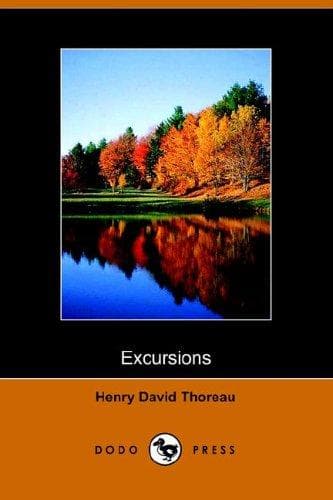
pines, birches, maples, and oaks. I am often surprised to see rising
amid these trees the rounded tops of apple-trees glowing with red or
yellow fruit; in harmony with the autumnal tints of the forest.
Going up the side of a cliff about the first of November, I saw a
vigorous young apple-tree, which, planted by birds or cows, had shot up
amid the rocks and open woods there, and had now much fruit on it,
uninjured by the frosts, when all cultivated apples were gathered. It
was a rank wild growth, with many green leaves on it still, and made an
impression of thorniness. The fruit was hard and green, but looked as
if it would be palatable in the winter. Some was dangling on the twigs,
but more half-buried in the wet leaves under the tree, or rolled far
down the hill amid the rocks. The owner knows nothing of it. The day
was not observed when it first blossomed, nor when it first bore fruit,
unless by the chickadee. There was no dancing on the green beneath it
in its honor, and now there is no hand to pluck its fruit,—which is
only gnawed by squirrels, as I perceive. It has done double duty,—not
only borne this crop, but each twig has grown a foot into the air. And
this is _such_ fruit! bigger than many berries, we must admit, and
carried home will be sound and palatable next spring. What care I for
Iduna’s apples so long as I can get these?
Public-domain text, read in full here on John Shaqi.
Reviews
Reviews
No reviews yet
Be the first to share your thoughts on this work.
Elsewhere in the archive
Join the Discussion
Join the discussion
Sign in to leave a comment or review.
Sign InorCreate an account