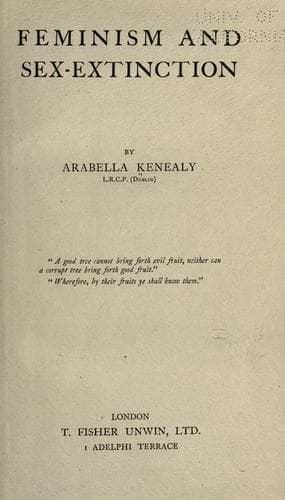
Feminism; Women; Women -- Social and moral questions; Women -- Social conditions
This book deals with the causes of friction and misunderstandings
between Great Britain and the United States during the trying years of
the Civil War. The reasons which, for a time, gave prominence to the
Southern sympathies of the British ruling classes, while rendering
almost inarticulate the far deeper feeling for the Cause of Union and
Emancipation among the masses of our people, are examined and explained.
Such dramatic incidents as the Trent affair, the launching of the
"Alabama," and Lincoln's Emancipation Proclamation are dealt with from
the point of view of their effect upon opinion in this country as
illustrated by contemporary correspondence and literature. Interesting
facts, now almost forgotten, of the movements inaugurated by the English
friends of the North to explain to our people the true issues at stake
in the conflict are reproduced, and an attempt is made to estimate the
influence of the controversies of the time on the subsequent relations
of the English-speaking peoples.
Mr. W. H. Chesson, grandson of George Thompson, the anti-slavery orator,
who was William Lloyd Garrison's bosom friend, contributes a chapter
which attempts to convey an impression of the influence of Transatlantic
problems upon English oratory and the writings of public men.
Woodrow Wilson: An interpretation. By A. MAURICE LOW, Author of
"The American People: A Study in National Psychology," with a
Portrait. Crown 8vo, cloth.
8s. 6d. NET. Inland Postage, 6d.
Mr. A. Maurice Low has long been recognised as, next to Lord Bryce, the
most acute, discriminating, and well-informed of the English critics of
America. His long residence in that country and his exhaustive study of
certain phases of American life have given him a background for the
interpretation of their political life.
Mr. Low has written this interpretation of President Wilson "because the
man to-day who occupies the largest place in the world's thought is
almost as little understood by his own people as he is by the peoples of
other countries, and still remains an enigma," but his point of view as
an interpreter is that of a contemporary foreign observer who, while
having the benefit of long residence in the United States and an
intimate knowledge of its people and politics, may justly claim a
detached point of view and to be uninfluenced by personal or political
considerations.
Peace-Making at Paris. By SISLEY HUDDLESTON. Large Crown 8vo,
cloth.
7s. 6d. NET. Inland Postage 6d.
Public-domain text, read in full here on John Shaqi.
Reviews
Reviews
No reviews yet
Be the first to share your thoughts on this work.
Elsewhere in the archive
Join the Discussion
Join the discussion
Sign in to leave a comment or review.
Sign InorCreate an account