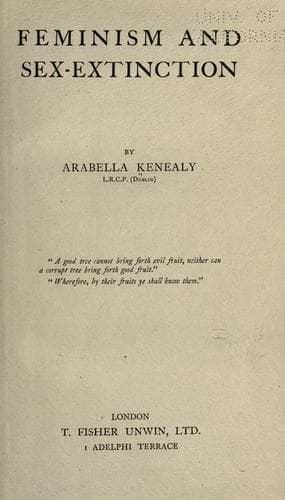
Feminism; Women; Women -- Social and moral questions; Women -- Social conditions
The broad way of collecting is crowded with bargain-hunters. Competitors
are keen and prices are high. All real collectors love peregrinations
into the unknown, and have often stumbled upon quaint and long-forgotten
objects which were once in everyday use, but are now relegated to the
attic or the lumber-room. In furniture there are many objects not deemed
desirable by the fashionable collector; in porcelain and earthenware
there is still much that has not reached the noisy mart to be chaffered
over as being rare. There are precious and beautiful things
comparatively unsought and unconsidered. Modernity has forgotten many
by-gone necessities. The tinder-box with its endless varieties has not
escaped studious attention but it has not come into the forefront of
collecting as has the ornate and bejewelled snuff-box with its more
highly attractive appearance. Old Playing-Cards, Old Fans, Silhouettes,
Patch-Boxes, Snuffers, Old Keys, Old Chests and Coffers, Earrings, Brass
Table-Bells, Carved Watch-Stands, Curious Teapots, Tea-Caddies and
Caddy-Spoons, Tobacco-Boxes, Tobacco-Stoppers, have their appeal to
collectors who have specialised and have become experts--that is, have
left the highway of collecting and pursued a delightful search in the
bye-paths. This volume deals with these, among other subjects.
The author has drawn upon his notebooks for twenty-five years, and has
opened to the reader a wonderful storehouse of miscellaneous information
illuminated with a gallery of photographic reproductions. As a pleasant
guide in the bye-paths of collecting, Mr. Hayden will fascinate those
real collectors who love collecting for its own sake.
Shakespeare and the Welsh. By FREDERICK J. HARRIES. Demy 8vo,
cloth.
15s. 0d. NET. Inland Postage 6d.
The author has dealt with his highly interesting subject in a manner
both critical and attractive. Not only has he examined Shakespeare's
knowledge of Welsh characteristics through a study of his Welsh
characters, but he has also collected much valuable information
regarding the Celtic sources from which Shakespeare drew his materials.
The opportunities which probably presented themselves to the poet for
studying Welshmen at first hand are suggested, and an endeavour is made
to arrive at an explanation of Shakespeare's singularly sympathetic
attitude toward the Welsh nation. What will strike the general reader
most, perhaps, is the variety of topics which arise around Shakespeare's
Celtic allusions, and a subject of great interest to the Welsh reader
will be the claim that Shakespeare was descended through his paternal
grandmother from the old Welsh kings. The claim is not a mere
speculative one, for a pedigree is given. The work is unique in many
respects, and should find a welcome not merely among Welshmen, but among
all Shakespeare students.
My Commonplace Book. J.T. HACKETT. Dem 8vo, Cloth.
12s. 6d. NET. Inland Postage, 6d.
Public-domain text, read in full here on John Shaqi.
Reviews
Reviews
No reviews yet
Be the first to share your thoughts on this work.
Elsewhere in the archive
Join the Discussion
Join the discussion
Sign in to leave a comment or review.
Sign InorCreate an account