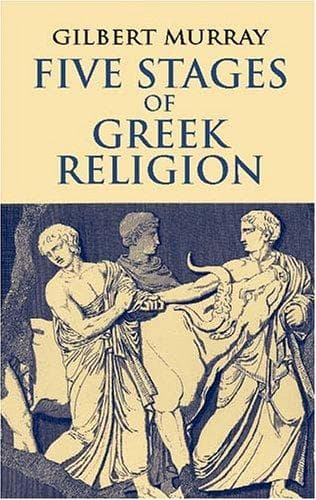
The custom of sacrificing animals had died out some time before this.
The Jews of the Dispersion had given it up long since because the Law
forbade any such sacrifice outside the Temple.[188:1] When Jerusalem was
destroyed Jewish sacrifice ceased altogether. The Christians seem from
the beginning to have generally followed the Jewish practice. But
sacrifice was in itself not likely to continue in a society of large
towns. It meant turning your temples into very ill-conducted
slaughter-houses, and was also associated with a great deal of muddled
and indiscriminate charity.[188:2] One might have hoped that men so
high-minded and spiritual as Julian and Sallustius would have considered
this practice unnecessary or even have reformed it away. But no. It was
part of the genuine Hellenic tradition; and no jot or tittle of that
tradition should, if they could help it, be allowed to die. Sacrifice is
desirable, argues Sallustius, because it is a gift of life. God has
given us life, as He has given us all else. We must therefore pay to Him
some emblematic tithe of life. Again, prayers in themselves are merely
words; but with sacrifice they are words plus life, Living Words.
Lastly, we are Life of a sort, and God is Life of an infinitely higher
sort. To approach Him we need always a medium or a mediator; the medium
between life and life must needs be life. We find that life in the
sacrificed animal.[189:1]
The argument shows what ingenuity these religious men had at their
command, and what trouble they would take to avoid having to face a fact
and reform a bad system.
Public-domain text, read in full here on John Shaqi.
Reviews
Reviews
No reviews yet
Be the first to share your thoughts on this work.
Elsewhere in the archive
Join the Discussion
Join the discussion
Sign in to leave a comment or review.
Sign InorCreate an account