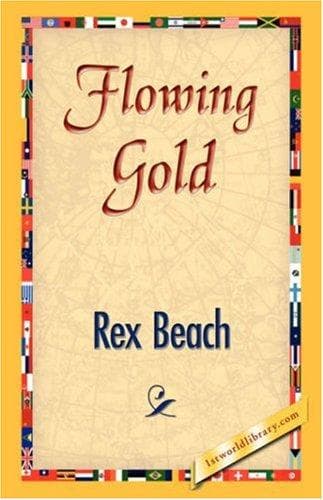
Petroleum industry and trade -- Texas -- Fiction; Texas -- History -- 20th century -- Fiction
When night came he took his bag and slunk out of the hotel, for it
seemed that men must surely know what a fool he had made of himself. It
would have been a relief to feel that he was leaving never to return;
but even that was denied him, for, after his first panic, the truth had
come home. He could not run away. He had forged chains for his own
limbs. Like a tethered mustang he could plunge only to the end of his
rope. Friendship, again! There was simple, trustful, faithful Gus
Briskow. And the bank. God, what a mess things were in! Gray knew he
would have to return, have to see "Bob" and Buddy day after day, month
after month, and the prospect was too distressing to dwell upon. Again
his mind grew weary, baffled; he experienced a wretched physical
illness... Where to go, where to hide until his sickness had passed?
That was the question.
For the first time he appreciated the full extent of his loneliness;
his utter lack of resource in a crisis like this. Most men, however
solitary, lay by material things for themselves, build homes and
surround themselves with personal possessions from which, or amid
which, they can gain some sort of solace in times of trial. But he had
not fashioned so much as a den into which he could creep and lick his
wounds. Once he had left his hotel room behind him he was in the open
and without cover. Not a single soul cared whether he came or went, not
another door stood ajar for him. And he had planned so much upon having
a home, a real home--But he could not trust himself to think much along
that line; it induced an absurd desire to weep at his plight. It made
him feel like a child lost in a wood. That was silly, just an emotional
reaction; nevertheless, the impulse was real and caused him to yearn
poignantly for human comfort.
He thought of Ma Briskow, finally. She was human; she had a heart. And
Dallas was a sort of homey place; anyhow, the bellboys at the Ajax knew
and liked him. That was probably because he had tipped them handsomely,
but what of that? If they'd be kind to him now he'd tip them more
handsomely than ever. Lonely men--old ones--must expect to pay for what
they get. He bought a ticket to Dallas.
Ma Briskow's eyes were dim; nevertheless, she saw the change in Calvin
Gray when, late the following afternoon, he came to see her.
"Land sakes!" she exclaimed, in a shocked voice. "Pa never said you was
ailin'. Why, Mr. Gray!"
"I'm not really ill," he told her, wearily, "just old. I've had a bad
night." Seating himself beside her couch, he took her hand in his and
made her tell him all about herself. He had brought her an armful of
flowers, as usual, and extravagant gifts for her adornment--giving, it
seemed, was his unconscious habit. While she admired them with ecstatic
"Ohs!" and "Ahs!" he busied himself with bowls and vases, but Ma noted
his fumbling uncertainty of touch and the evident effort with which he
kept up his assumption of good cheer. She told him, finally:
Public-domain text, read in full here on John Shaqi.
Reviews
Reviews
No reviews yet
Be the first to share your thoughts on this work.
Elsewhere in the archive
Join the Discussion
Join the discussion
Sign in to leave a comment or review.
Sign InorCreate an account