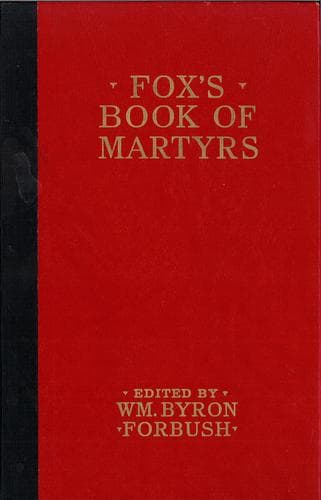
Fox's Book of Martyrs: Or A History of the Lives, Sufferings, and Triumphant; Deaths of the Primitive Protestant MartyrsFoxe, John
HistoryHistory
Fox's Book of Martyrs: Or A History of the Lives, Sufferings, and Triumphant; Deaths of the Primitive Protestant Martyrs
Foxe, John
Church history; Martyrs; Persecution
Two days were allowed him in hopes that he would recant; in which time
the cardinal of Florence used his utmost endeavours to bring him over.
But they all proved ineffectual. Jerom was resolved to seal the doctrine
with his blood; and he suffered death with the most distinguished
magnanimity.
In going to the place of execution he sung several hymns, and when he
came to the spot, which was the same where Huss had been burnt, he knelt
down, and prayed fervently. He embraced the stake with great
cheerfulness, and when they went behind him to set fire to the fagots,
he said, "Come here, and kindle it before my eyes; for if I had been
afraid of it, I had not come to this place." The fire being kindled, he
sung a hymn, but was soon interrupted by the flames; and the last words
he was heard to say these:--"This soul in flames I offer."
The elegant Pogge, a learned gentleman of Florence, secretary to two
popes, and a zealous but liberal catholic, in a letter to Leonard
Arotin, bore ample testimony of the extraordinary powers and virtues of
Jerom whom he emphatically styles, A prodigious man!
_Zisca._
The real name of this zealous servant of Christ was John de Trocznow,
that of Zisca is a Bohemian word, signifying one-eyed, as he had lost an
eye. He was a native of Bohemia, of a good family and left the court of
Winceslaus, to enter into the service of the king of Poland against the
Teutonic knights. Having obtained a badge of honour and a purse of
ducats for his gallantry, at the close of the war he returned to the
court of Winceslaus, to whom he boldly avowed the deep interest he took
in the bloody affront offered to his majesty's subjects at Constance in
the affair of Huss. Winceslaus lamented it was not in his power to
revenge it; and from this moment Zisca is said to have formed the idea
of asserting the religious liberties of his country. In the year 1418,
the council was dissolved, having done more mischief than good, and in
the summer of that year a general meeting was held of the friends of
religious reformation, at the castle of Wilgrade, who, conducted by
Zisca, repaired to the emperor with arms in their hands, and offered to
defend him against his enemies. The king bid them use their arms
properly, and this stroke of policy first insured to Zisca the
confidence of his party.
Public-domain text, read in full here on John Shaqi.
Reviews
Reviews
No reviews yet
Be the first to share your thoughts on this work.
Elsewhere in the archive
Join the Discussion
Join the discussion
Sign in to leave a comment or review.
Sign InorCreate an account