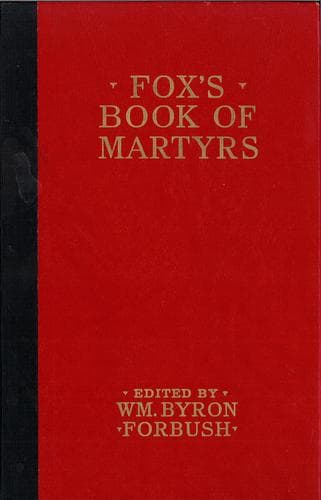
Fox's Book of Martyrs: Or A History of the Lives, Sufferings, and Triumphant; Deaths of the Primitive Protestant MartyrsFoxe, John
HistoryHistory
Fox's Book of Martyrs: Or A History of the Lives, Sufferings, and Triumphant; Deaths of the Primitive Protestant Martyrs
Foxe, John
Church history; Martyrs; Persecution
A secret order was soon after issued by the emperor, for apprehending
all noblemen and gentlemen, who had been principally concerned in
supporting the protestant cause, and in nominating Frederic elector
Palatine of the Rhine, to be king of Bohemia. These, to the number of
fifty, were apprehended in one night, and at one hour, and brought from
the places where they were taken, to the castle of Prague, and the
estates of those who were absent from the kingdom were confiscated,
themselves were made outlaws, and their names fixed upon a gallows, as
marks of public ignominy.
The high court of reformers then proceeded to try the fifty, who had
been apprehended, and two apostate protestants were appointed to examine
them. These examinants asked a great number of unnecessary and
impertinent questions, which so exasperated one of the noblemen, who was
naturally of a warm temper, that he exclaimed opening his breast at the
same time, "Cut here, search my heart, you shall find nothing but the
love of religion and liberty; those were the motives for which I drew my
sword, and for those I am willing to suffer death."
As none of the prisoners would change their religion, or acknowledge
they had been in error, they were all pronounced guilty; but the
sentence was referred to the emperor. When that monarch had read their
names, and an account of the respective accusations against them, he
passed judgment on all, but in a different manner, as his sentences
were of four kinds, viz. death, banishment, imprisonment for life, and
imprisonment during pleasure.
Twenty being ordered for execution, were informed they might send for
Jesuits, monks, or friars, to prepare for the awful change they were to
undergo; but that no protestants should be permitted to come near them.
This proposal they rejected, and strove all they could to comfort and
cheer each other upon the solemn occasion.
On the morning of the day appointed for the execution, a cannon was
fired as a signal to bring the prisoners from the castle to the
principal market-place, in which scaffolds were erected, and a body of
troops were drawn up to attend the tragic scene.
The prisoners left the castle with as much cheerfulness as if they had
been going to an agreeable entertainment, instead of a violent death.
Exclusive of soldiers, Jesuits, priests, executioners, attendants, &c. a
prodigious concourse of people attended, to see the exit of these
devoted martyrs, who were executed in the following order.
Public-domain text, read in full here on John Shaqi.
Reviews
Reviews
No reviews yet
Be the first to share your thoughts on this work.
Elsewhere in the archive
Join the Discussion
Join the discussion
Sign in to leave a comment or review.
Sign InorCreate an account