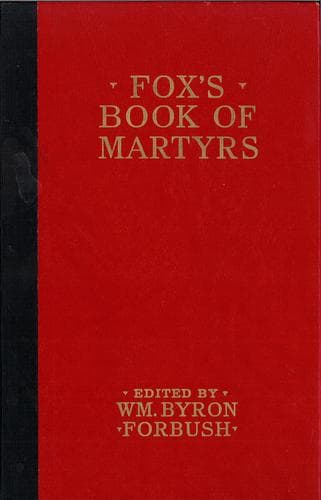
Fox's Book of Martyrs: Or A History of the Lives, Sufferings, and Triumphant; Deaths of the Primitive Protestant MartyrsFoxe, John
HistoryHistory
Fox's Book of Martyrs: Or A History of the Lives, Sufferings, and Triumphant; Deaths of the Primitive Protestant Martyrs
Foxe, John
Church history; Martyrs; Persecution
About the beginning of the year 1522, Mr. Wrigsham, a glover; Mr
Langdale, a hosier; Thomas Bond, Robert Harchets, and William Archer,
shoemaker, with Mrs. Smith, a widow, were apprehended on Ash Wednesday
and committed to prison. After examination, the bishop of Litchfield
declared them to be heretics, and they were all condemned and burnt
alive at Coventry.
Robert Silks, who had been condemned in the bishop's court as a heretic,
made his escape out of prison, but was taken two years afterward, and
brought back to Coventry, where he was burnt alive.--The sheriffs always
seized the goods of the martyrs for their own use, so that their wives
and children were left to starve.
In 1532, Thomas Harding, who with his wife, had been accused of heresy,
was brought before the bishop of Lincoln, and condemned for denying the
real presence in the sacrament. He was then chained to a stake, erected
for the purpose, at Chesham in the Pell, near Botely; and when they had
set fire to the fagots, one of the spectators dashed out his brains with
a billet. The priests told the people, that whoever brought fagots to
burn heretics would have an indulgence to commit sins for forty days.
During the latter end of this year, Worham, archbishop of Canterbury,
apprehended one Hitten, a priest at Maidstone; and after he had been
long tortured in prison, and several times examined by the archbishop,
and Fisher, bishop of Rochester, he was condemned as a heretic, and
burnt alive before the door of his own parish church.
Thomas Bilney, professor of civil law at Cambridge, was brought before
the bishop of London, and several other bishops, in the Chapter house,
Westminster, and being several times threatened with the stake and
flames, he was weak enough to recant; but he repented severely
afterward.
For this he was brought before the bishop a second time, and condemned
to death. Before he went to the stake he confessed his adherence to
those opinions which Luther held; and, when at it, he smiled, and said,
"I have had many storms in this world, but now my vessel will soon be on
shore in heaven." He stood unmoved in the flames, crying out, "Jesus, I
believe;" and these were the last words he was heard to utter.
Public-domain text, read in full here on John Shaqi.
Reviews
Reviews
No reviews yet
Be the first to share your thoughts on this work.
Elsewhere in the archive
Join the Discussion
Join the discussion
Sign in to leave a comment or review.
Sign InorCreate an account