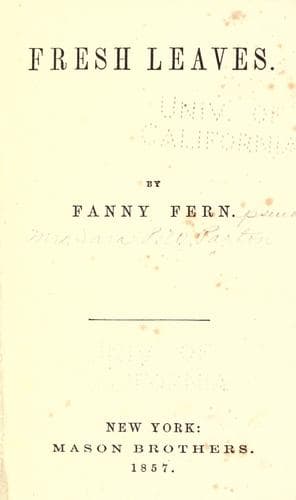
American essays -- 19th century; Short stories, American
Now the young man staggers out, shuddering as he passes the hearse,
and screening his swollen lids from curious gazers and the obtrusive
sunshine, to whom broken hearts are an every-day story. The jolly
undertaker rubs his hands, for death is busy and business is brisk. The
young man has made no bargain with him beforehand as to prices; how
could he? his heart was full of the widowed sister he left behind, and
her newly-made orphans; he only remarked, as he left the street and
number, “to do what is customary;” and custom requires that carriages
shall be provided for all the “friends and acquaintances” who may wish
to go. So “friends and acquaintances” gather (when the funeral hour
arrives). Why not? The day is fine and a ride to the out-of-town
cemetery pleasant, and (to them) inexpensive; they whose eyes scarce
rested with interest on the living form, gaze ceremoniously and
curiously on the dead; the widow’s tears are counted, the mourning
dresses of herself and children scrutinized; the prayer that always
falls so immeasurably short of what critical ears demand, is said; a
great silence--then a rustling--bustling--whispering--then the coffin is
borne past the widow, who sees it through a mist of tears; and then the
long procession winds its way through harlequin Broadway, with its brass
bands, and military companies, its thundering omnibusses, its bedizened
courtezans, its laughing pedestrians, and astonished, simple-hearted
country-folk. Wheels lock, milk carts and market wagons join the
procession; Barnum’s band pipes from out the Museum balcony merry
“Yankee Doodle,” and amid curses and shouts, laughter and tears, the
mournful cavalcade moves on.
And now the incongruous showy farce is over, and the “friends and
acquaintances” alighting at their respective houses, re-cross their
unblighted thresholds, and the widow and children return to their
desolate hearth-stone (_how_ desolate, God and themselves only know);
while poverty, strange and unbidden guest, creeps stealthily after them,
and takes the empty chair.
O clamorous tyrant, Custom! O thoughtless, unfriendly friends, who can
mourn for the dead only in carriages, that swallow up the little legacy
left for the living, by the dead for whom you profess to grieve!
Beautiful the calm faith of Swedenborg, turning its hopeful eye away
from such childish sackcloth mummery; anchoring where no wave of earthly
trouble rolls; gliding through the accustomed life-paths, not lonely,
not hopeless; feeling still the warm life-clasp, hearing still the loved
voices, breaking the bread, or blessing the meat.
THE “FAVORITE” CHILD.
Public-domain text, read in full here on John Shaqi.
Reviews
Reviews
No reviews yet
Be the first to share your thoughts on this work.
Elsewhere in the archive
Join the Discussion
Join the discussion
Sign in to leave a comment or review.
Sign InorCreate an account