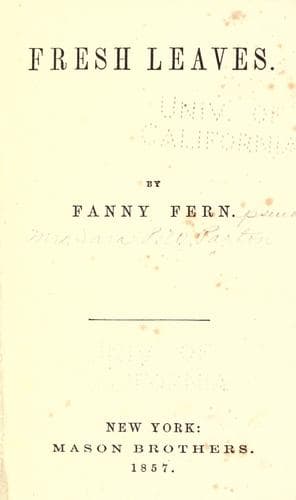
American essays -- 19th century; Short stories, American
Liberty! it would be sweet! But, pshaw! why dream of it? Men were
proverbially ungrateful. Ten to one, the officer would never think of
his promise again; or if he did, the governor would lay it on the table,
to be indefinitely postponed, or forgotten, or rejected, with a thousand
other troublesome applications. No--suns would rise and set just as they
had done, and time for him would be marked only by the prison-bell, with
its clanging summons to labor. He should see, every day, as he had done,
the poor lame prisoner sunning himself in his favorite corner in the
yard--he should see the prisoners’ mattresses, hung on the rails to
air--he should see the gleam of the blacksmith’s forge, and hear the
stroke of the stonecutter’s hammer; the shuttle would fly, and the wheel
turn round. He should sit down to his wooden plate, his square bit of
salt meat, and his one potato, and drink water out of his rusty tin cup.
He should gasp out the starry nights in his stifling cell; he should
hear the rustling of silken robes, as ladies went the prison rounds, and
his heart would beat quick as he thought of Mary; he should burn forever
with the fire of remorse and shame--yet never consume; the taper would
flicker and flicker--yet never go out.
So Percy sat carelessly down on the hospital bench, to have his wound
dressed; and listened to the asthmatic breathing of the sick man at his
side, and saw the hospital cook stirring in a cauldron some diluted
broth, and watched the doctor, as he compounded a plaster, and leisurely
smoked a cigar; and looked at a green branch which the wind ever and
anon swept across the grated window, showering its snowy blossoms, as if
in mockery, on the prison floor.
O, no--liberty was not for him--and why should it be? Had he not
forfeited it by his own rash act?--was not his punishment just?--had he
not lost the confidence of his fellow men?--crushed the noblest and
purest heart that ever God warmed into life and love? It was all too
true, and there had been moments when he meekly accepted his punishment,
when he toiled in his prison uniform, not as if under the eye of a
taskmaster, but willingly, almost cheerfully, as if by expiatory penance
he could atone to himself for the wrong he had done that guileless
heart. O, did it still beat? and for him? for the thousandth time he
questioned. Could Mary look on him? smile on him? _love_ him still? O,
what mockery were liberty else! What mattered it how brightly the sun
shone, if it shone not on their love purified and intensified by sorrow?
What matter how green the earth, if they walked not through it side by
side? What mattered it how fresh the breeze--how blue the sky--how soft
the moonbeams--how sweet the flowers--how bright the stars--if day and
night found not their twin hearts beating like one? Better his cell
should be his tomb.
CHAPTER XIV.
Public-domain text, read in full here on John Shaqi.
Reviews
Reviews
No reviews yet
Be the first to share your thoughts on this work.
Elsewhere in the archive
Join the Discussion
Join the discussion
Sign in to leave a comment or review.
Sign InorCreate an account