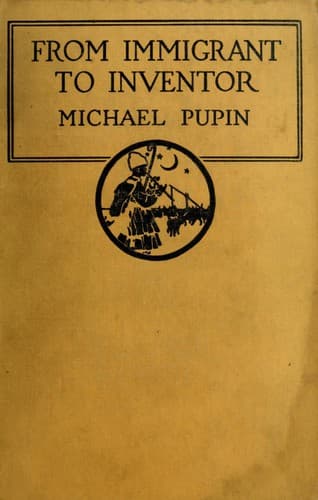
Inventors -- United States -- Biography; Pupin, Michael, 1858-1935
A hundred and fifty years later the Continental Congress of
the colonies issued, at Philadelphia, the “Declaration of
Colonial Rights,” and this declaration, as well as the documents
accompanying it and addressed to the people of the United Kingdom
and of British America, breathes the spirit of lofty idealism. The
same Congress in 1775 issued another declaration, setting forth
causes which forced the American colonies to take up arms; and in
1776 it issued the Declaration of Independence, which announced
to the world the ideals for the attainment of which the colonists
were ready to sacrifice their lives. No other human documents ever
stated so clearly and so definitely the “divine right of man” as
these documents did. The men who composed these documents were
not ordinary men; they were idealists of the highest type. Read
the lives of Washington, Hamilton, Franklin, Jay, Jefferson, and
of other leaders of the American Revolutionary period, and you
will find what a wonderful power idealism has when the destiny of
a young nation hangs in the balance. But when the struggle was
over, after the victory had been won, the leader of the new nation,
immortal Washington, assumed the supreme executive office of the
land and retired from it after two terms of service with a spirit
of dignity and of humility which has no equal in human history. His
Farewell Address to the American people, advocating the practice of
idealism by the cultivation of religion, morality, patriotism, good
faith, and justice toward all nations, is an echo of the voice of
idealism which was the driving power of the American Revolution.
Public-domain text, read in full here on John Shaqi.
Reviews
Reviews
No reviews yet
Be the first to share your thoughts on this work.
Elsewhere in the archive
Join the Discussion
Join the discussion
Sign in to leave a comment or review.
Sign InorCreate an account