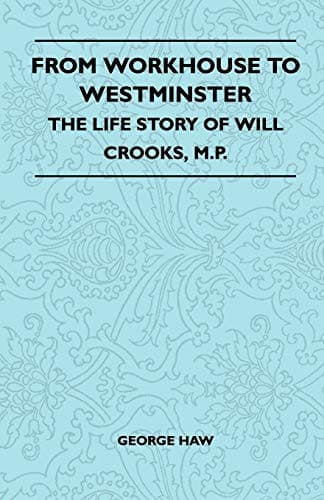
From Workhouse to Westminster: The Life Story of Will Crooks, M.P.Haw, George
History
From Workhouse to Westminster: The Life Story of Will Crooks, M.P.
Haw, George
Crooks, William, 1852-1921; Legislators -- Great Britain -- Biography; Social reformers -- Great Britain -- Biography
These little "ins-and-outs" were getting no schooling and no training
save the training that fitted them for pauperism. What to do with them
had long been a perplexing problem. If they were sent to Forest Gate one
day their parents in the workhouse could demand them back the next day
and take their discharge, even though they and their children turned up
at the gates for re-admission within the next twenty-four hours.
When Crooks proposed the simple expedient of sending these children to
the surrounding day-schools everybody seemed amazed.
The idea had never been heard of before. The London School Board of the
day did not take kindly to it at all. It poured cold water on the
project at first. The neighbouring schools were nearly all full, and the
Board thought it would hear no more of the matter by suggesting that if
the Guardians could find vacant places they were at liberty of course to
send the children.
Crooks framed an answering letter that it was the School Board's duty to
find the places, and that, come what would, the Guardians were
determined to send the children to the day schools.
Soon places were found for all. The little people who, through neglect
and idleness in the workhouse, had been getting steeped in pauperism,
were now dressed in non-institution clothes, and they went to and from
the neighbouring schools, playing on the way like any other children.
That was the beginning of a system destined to have a far-reaching
effect on Poor Law children all over the country. Other Unions, faced
with the same problem, seeing how well it had been dealt with at Poplar,
went and did likewise.
The Labour Guardian did not rest there. The children were a great deal
better for coming in daily contact with the outside world, but much of
the good work was undone by their having to spend every night in the
workhouse. He wanted to keep them away altogether from its
contaminating influence. He persuaded the Guardians to purchase a large
dwelling house about a quarter of a mile away from the workhouse. This
became a real home for the children. There they are brought up and
regularly sent to the public day schools outside, entirely free from
workhouse surroundings.
So long as the mark of the workhouse clings to children, so long, says
Crooks, will children cling to the workhouse. That is what makes him so
keen in getting rid of the institution dress and of everything else
likely to brand a child.
Public-domain text, read in full here on John Shaqi.
Reviews
Reviews
No reviews yet
Be the first to share your thoughts on this work.
Elsewhere in the archive
Join the Discussion
Join the discussion
Sign in to leave a comment or review.
Sign InorCreate an account