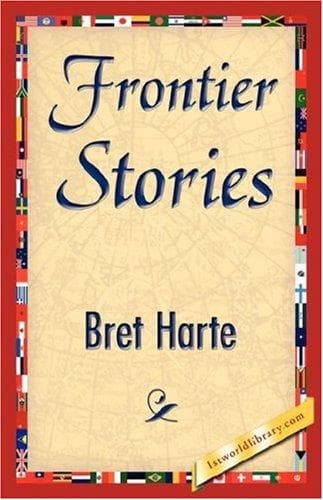
California -- Social life and customs -- Fiction; Western stories
He remembered how, a fatherless, truant schoolboy, he had drifted into
their adventurous, nomadic life, itself a life of grown-up truancy like
his own, and became one of that gypsy family. How they had taken the
place of relations and household in his boyish fancy, filling it with
the unsubstantial pageantry of a child's play at grown-up existence, he
knew only too well. But how, from being a pet and _protégé_, he had
gradually and unconsciously asserted his own individuality and taken
upon his younger shoulders not only a poet's keen appreciation of that
life, but its actual responsibilities and half-childish burdens, he
never suspected. He had fondly believed that he was a neophyte in their
ways, a novice in their charming faith and indolent creed, and they had
encouraged it; now their renunciation of that faith could only be an
excuse for a renunciation of _him_. The poetry that had for two years
invested the material and sometimes even mean details of their
existence was too much a part of himself to be lightly dispelled. The
lesson of those ingenuous moralists failed, as such lessons are apt to
fail; their discipline provoked but did not subdue; a rising
indignation, stirred by a sense of injury, mounted to his cheek and
eyes. It was slow to come, but was none the less violent that it had
been preceded by the benumbing shock of shame and pride.
I hope I shall not prejudice the reader's sympathies if my duty as a
simple chronicler compels me to state, therefore, that the sober second
thought of this gentle poet was to burn down the cabin on the spot with
all its contents. This yielded to a milder counsel--waiting for the
return of the party, challenging the Right Bower, a duel to the death,
perhaps himself the victim, with the crushing explanation _in
extremis_, "It seems we are _one_ too many. No matter; it is settled
now. Farewell!" Dimly remembering, however, that there was something of
this in the last well-worn novel they had read together, and that his
antagonist might recognize it, or even worse, anticipate it himself,
the idea was quickly rejected. Besides, the opportunity for an
apotheosis of self-sacrifice was past. Nothing remained now but to
refuse the proffered bribe of claim and cabin by letter, for he must
not wait their return. He tore a leaf from a blotted diary, begun and
abandoned long since, and essayed to write. Scrawl after scrawl was
torn up, until his fury had cooled down to a frigid third personality.
"Mr. John Ford regrets to inform his late partners that their tender of
house, of furniture," however, seemed too inconsistent with the
pork-barrel table he was writing on; a more eloquent renunciation of
their offer became frivolous and idiotic from a caricature of Union
Mills, label and all, that appeared suddenly on the other side of the
leaf; and when he at last indited a satisfactory and impassioned
exposition of his feelings, the legible _addendum_ of "Oh, ain't you
Public-domain text, read in full here on John Shaqi.
Reviews
Reviews
No reviews yet
Be the first to share your thoughts on this work.
Elsewhere in the archive
Join the Discussion
Join the discussion
Sign in to leave a comment or review.
Sign InorCreate an account